

Car Parking Garage Flooring
Car parking flooring is a specialized flooring system designed to withstand vehicle traffic, tire friction, oil and fuel spills, moisture, abrasion, and continuous load-bearing stress. PU and Epoxy flooring systems provide durable, seamless, slip-resistant, and easy-to-maintain surfaces for basement, multi-level, commercial, and industrial parking facilities.
Fountech designs and installs PU and Epoxy car parking flooring systems across Bangladesh, selecting the appropriate system based on traffic, substrate condition, exposure, and performance requirements.
Unprotected concrete parking floors can deteriorate over time when exposed to vehicle traffic, tire loads, oil and fuel spills, moisture, abrasion, and temperature changes. we often see these common failure modes:
- Surface dusting and cracking
- Oil and grease staining
- Moisture-related deterioration
- Slippery surfaces when wet
- Difficult cleaning and maintenance
A properly designed PU or Epoxy parking flooring system helps protect the concrete surface and improve durability, safety, appearance, and ease of maintenance.

Both are excellent choices. Knowing the difference will help you choose the right system for your parking environment.
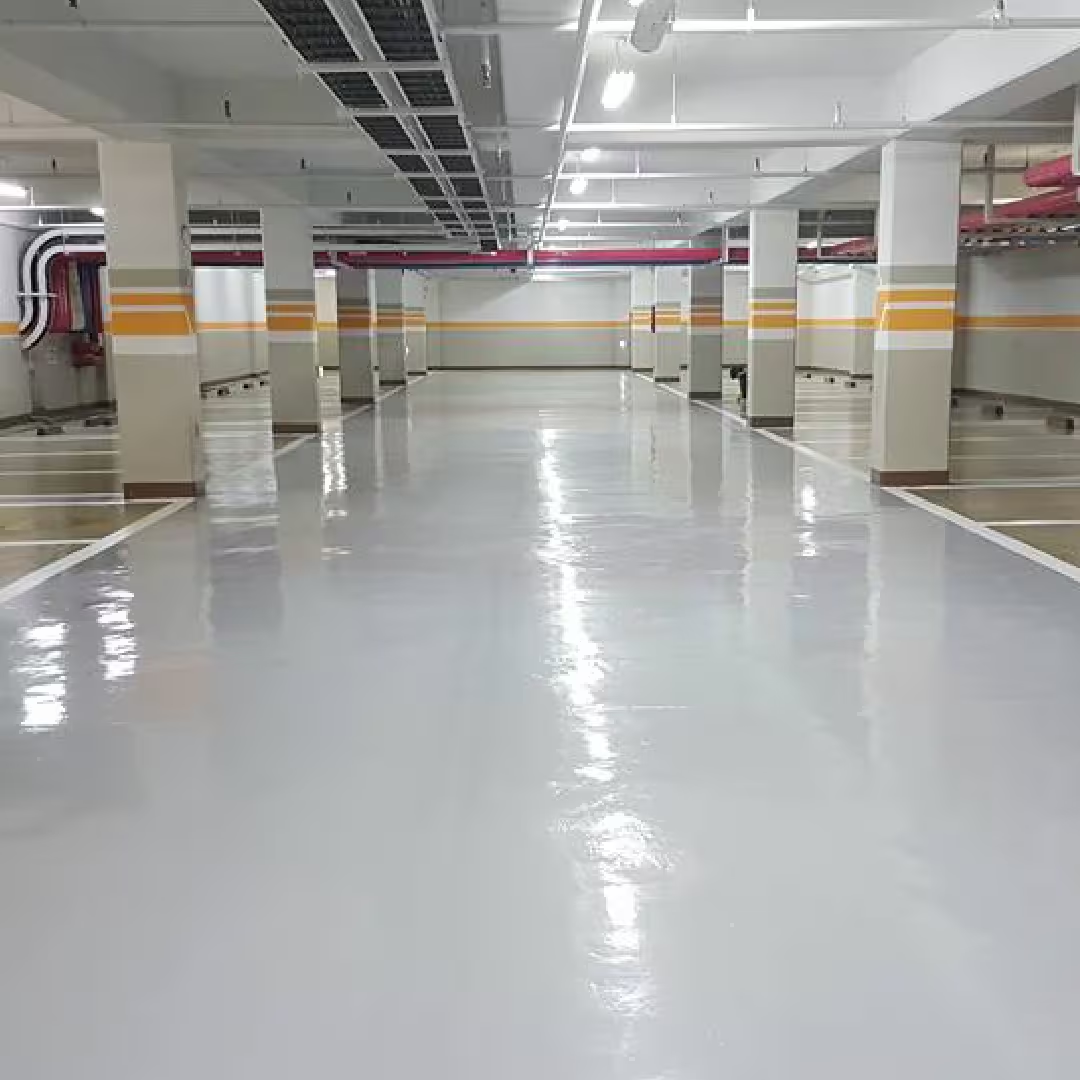
PU Car Parking Flooring
- Flexibility: More flexible and better suited to substrates exposed to movement and thermal stress.
- Temperature Resistance: Good performance across temperature variations, depending on the selected system.
- Durability: Suitable for heavy traffic, abrasion, and demanding parking environments.
- Best Applications: Basement, multi-level, industrial, and high-traffic parking areas.
- Finish: Available in different colors and surface finishes, including anti-slip options.
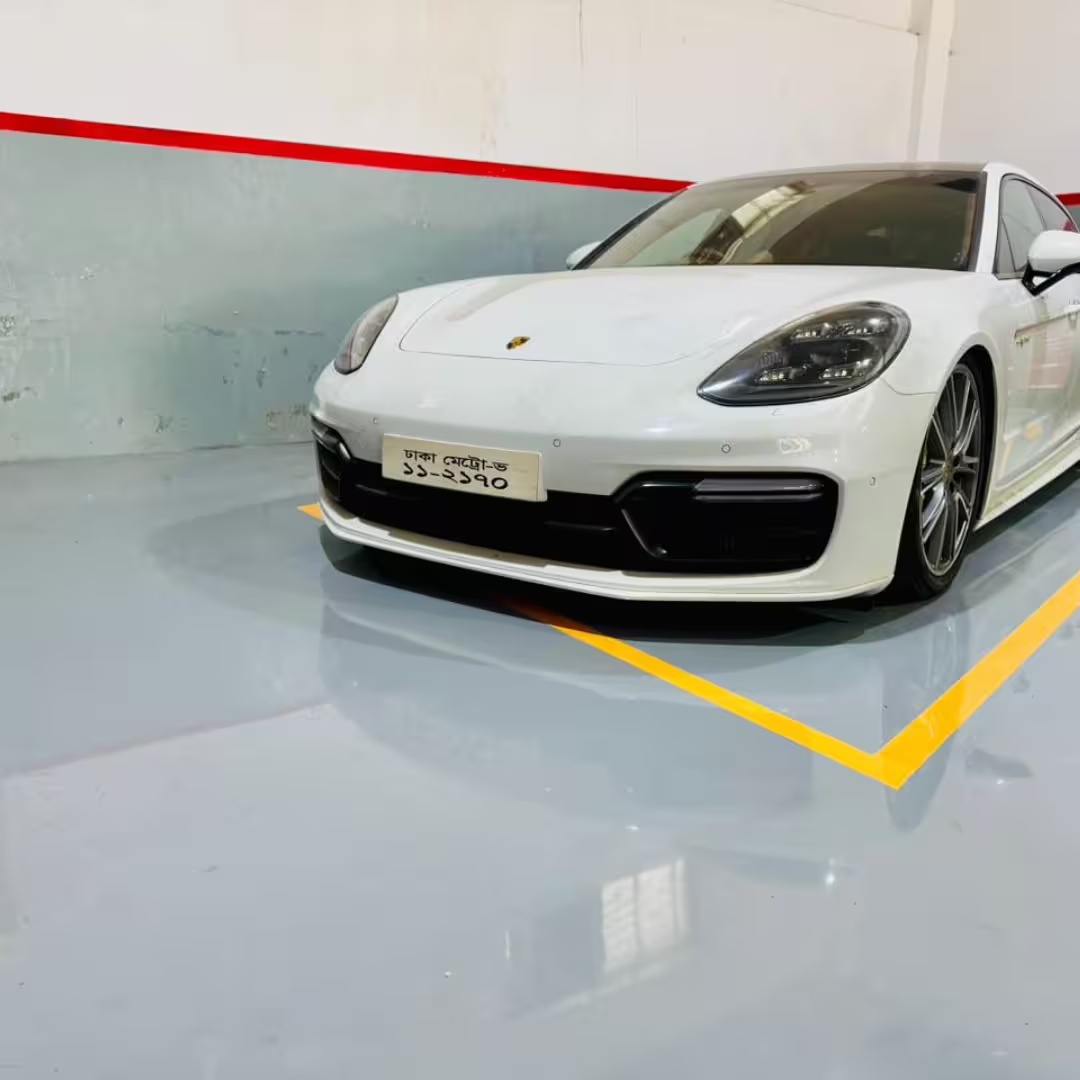
Epoxy Car Parking Flooring
- Hardness: Provides a hard, rigid and durable surface.
- Chemical Resistance: Good resistance to oils, chemicals, stains, and general contamination.
- Durability: Suitable for many residential, commercial, and industrial parking applications.
- Best Applications: Areas where a hard, seamless and decorative surface is required.
- Finish: Available in a wide range of colors and high-gloss or other finishes. Worldwide epoxy Garage or Car parking very Popular.
High-Performance Parking Floor Solution
A parking floor must do more than look good. It needs to withstand continuous vehicle traffic, tire friction, oil and fuel exposure, moisture, abrasion, and daily wear while maintaining a safe and clean surface. Fountech selects and applies PU and Epoxy flooring systems according to the specific requirements of each parking facility, including traffic levels, substrate condition, exposure, and required finish.
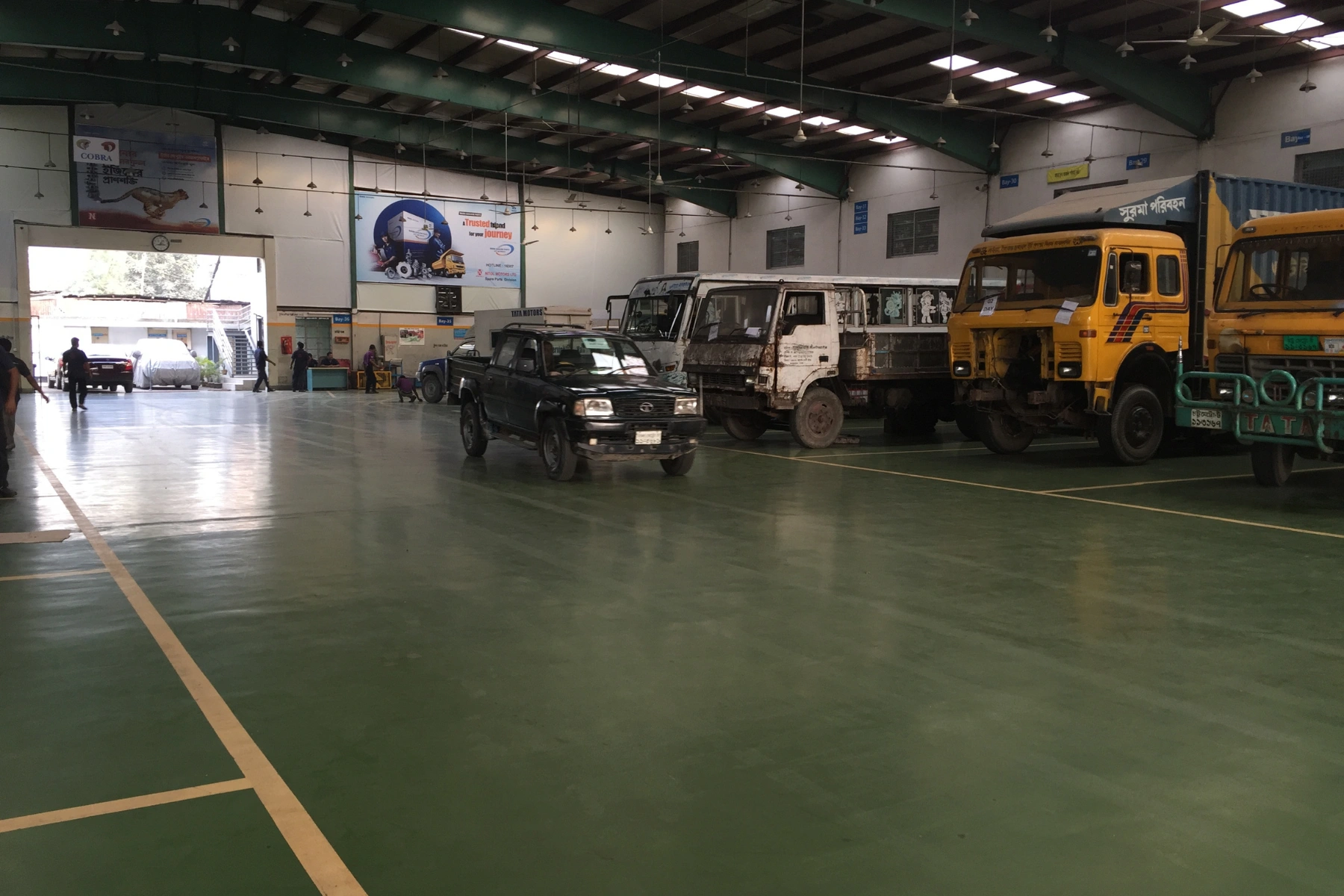
Key Benefits of Car Parking Flooring
High Durability
Designed to withstand continuous vehicle traffic, tire friction, abrasion, impact, and everyday wear.Oil & Chemical Resistance
Provides protection against common parking contaminants such as oils, fuels, grease, and selected chemicals.Slip Resistance
Anti-slip finishes can improve traction for both vehicles and pedestrians, particularly in wet or exposed areas.Flexibility & Crack Resistance
PU systems offer flexibility that can help accommodate minor substrate movement and thermal stress.Easy Maintenance
Seamless surfaces are easier to clean and maintain than rough, unprotected concrete.Aesthetic Appearance
Available in different colors, textures, and finishes to create a clean and professional parking environment.
Application Area
- Underground Parking Lots: PU and epoxy flooring are great for basement garages because they resist moisture and last a long time. PU can handle slight structural movement, while epoxy creates a strong, sealed surface.
- Multi-Level Parking Structures: Both PU and epoxy flooring systems work well in multi-story car parks. They offer high load-bearing strength and resist continuous vehicle traffic.
- Commercial Garages: In workshops and commercial garages, PU and epoxy flooring provide strong protection against oils, chemicals, and heavy wear.
- Residential Parking Areas: In residential buildings, PU and epoxy flooring create a durable, slip-resistant, and easy-to-maintain surface. This makes it safe for vehicles and pedestrians.
- Airport, Stodium, Metro, etc Public Parking Areas: PU and epoxy flooring systems work well in Public car parks areas. Epoxy Decorative Terazzo system, High glossy Polyaspatric or Clear colour aliphatic PU also avilable for this sector.

Fountech has been providing industrial and car parking flooring solutions in Bangladesh since 2006. With 20+ years of experience and 2,000+ completed flooring projects, our engineering and application teams assess site conditions and recommend suitable flooring systems for each parking environment. From surface preparation to final application, we focus on durability, safety, quality, and long-term performance.
A high-quality parking floor coating in Bangladesh begins with preparation, not the product. Poor surface preparation is the main reason flooring systems fail early. Here is how Fountech handles each installation:
01 — Surface Inspection
We assess the concrete condition, cracks, moisture, existing coatings, traffic requirements, and other site conditions.02 — Surface Preparation
The concrete is mechanically ground and cleaned to remove weak layers, dust, dirt, contamination, and existing coatings where required.03 — Primer Application
A suitable primer is applied to establish strong adhesion between the prepared concrete and the flooring system.04 — PU or Epoxy Application
The selected flooring system is applied according to the specified thickness, system design, and site requirements.05 — Anti-Slip & Final Finish
The required anti-slip texture and final finish are applied to improve safety, appearance, and long-term performance.

FAQs
How long does car parking flooring last in Bangladesh?
When professionally applied and properly maintained, PU and Epoxy parking flooring typically lasts 10 to 15 years in high-traffic environments.
What is the difference between PU and epoxy for parking floors?
PU is more flexible and better suited to areas with structural movement, while epoxy offers a harder, glossier surface. For most parking structures in Bangladesh, PU is the recommended choice.
Is PU flooring good for basement parking?
Yes. PU’s flexibility makes it perfect for basements where moisture and minor concrete movement are common.
Is parking garage flooring slip-resistant?
Yes. Anti-slip finishes are applied as standard, keeping the surface safe even when wet.
Can epoxy or PU flooring be applied over old concrete?
Yes, as long as the concrete is structurally sound. Our team grinds and prepares the surface to remove any old coating, dirt, or contamination. Then, we apply the new system over the prepared substrate.
How long does installation take?
Most projects are completed within 3–7 days depending on the area size and condition.