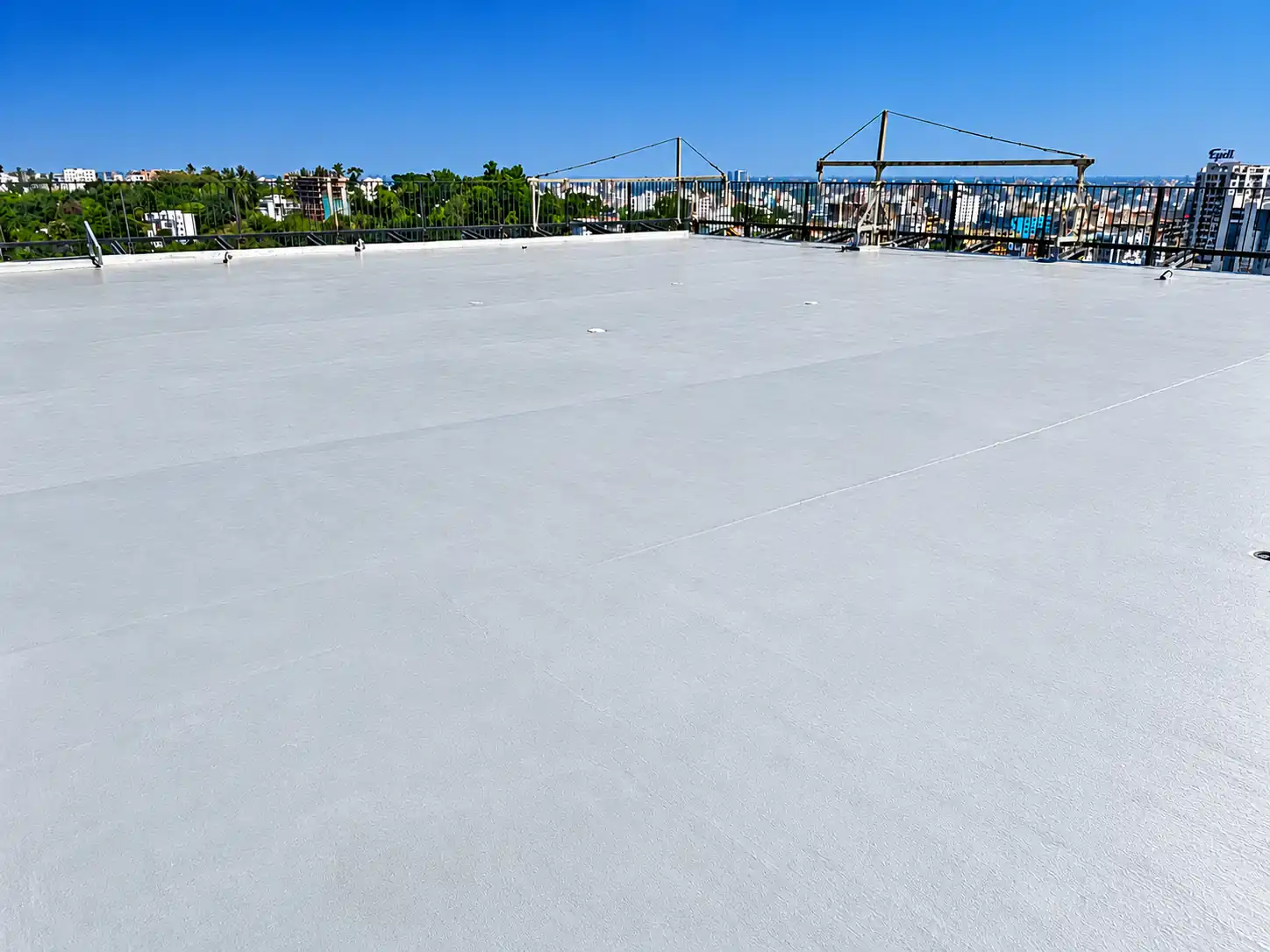
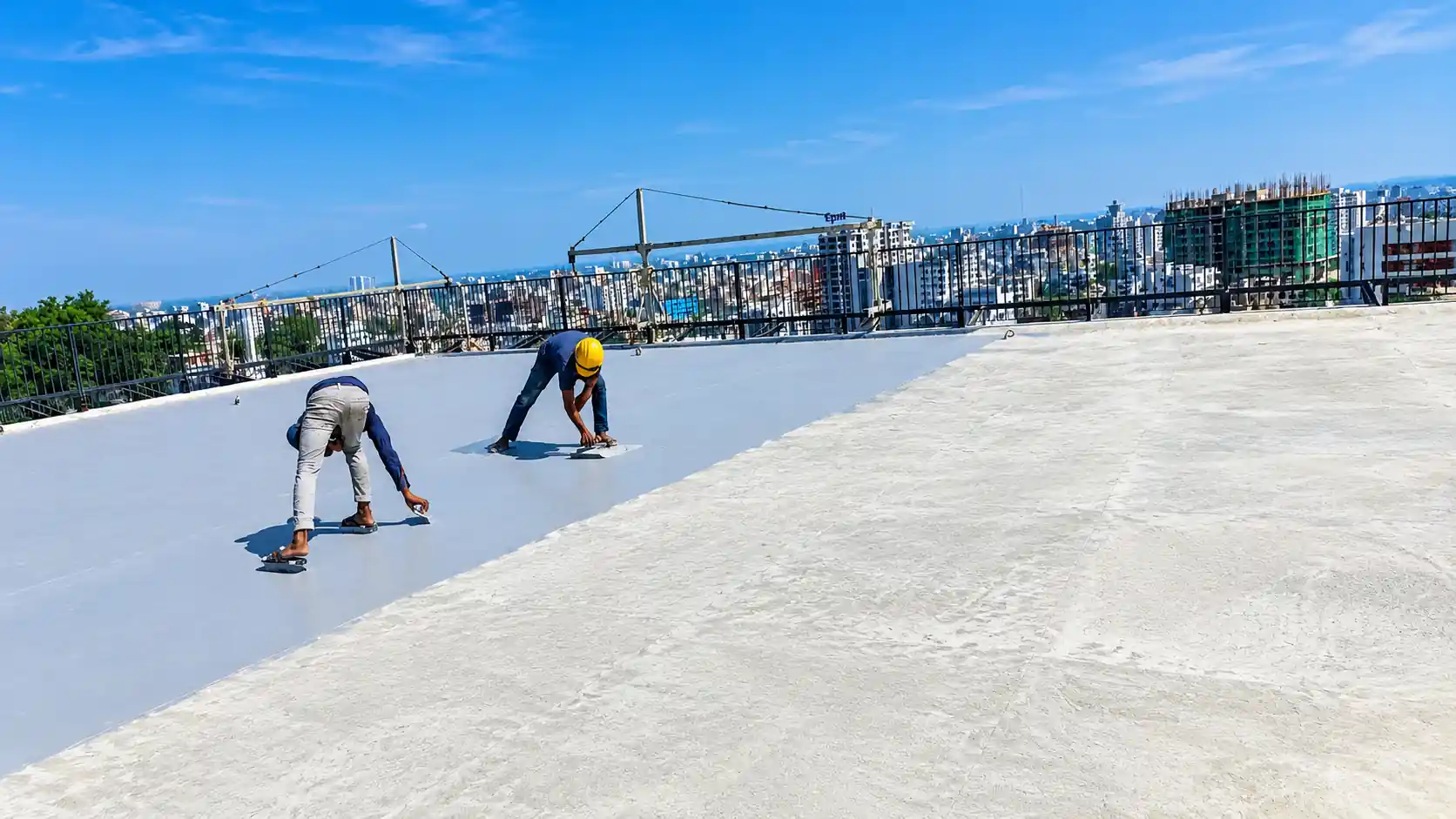
Cementitious Waterproofing in Bangladesh
Roof leakage, damp walls and seepage in bathrooms are some of the most common building problems in Bangladesh, and most of them start with water slowly entering the concrete. Fountech’s cementitious waterproofing stops that at the source with a polymer-modified, cement-based coating that bonds directly with concrete and forms a seamless waterproof layer on roofs, bathrooms, water tanks and basements.
As an experienced waterproofing company in Bangladesh, operating since 2006, our team handles residential, commercial and industrial projects in Dhaka and across the country, from new construction to roof leakage repair.
Whether it is a leaking roof slab, a damp bathroom wall or a seeping underground water tank, we first find the cause of the problem and then recommend the right cementitious system for that surface.
What Is Cementitious Waterproofing?
Cementitious waterproofing is a cement-based coating made from cement, graded sand, polymer additives and waterproofing chemicals. Applied in two or more coats, it hardens into a dense, water-resistant layer that becomes part of the concrete or masonry surface and blocks water ingress, seepage and dampness.
Because it is cement-based, it bonds strongly with concrete and brick, is easy to apply and can be used on slightly damp surfaces. There are two common types:
- Rigid cementitious coating – for areas with little movement, such as water tanks, basements and lift pits.
- Flexible (polymer-modified) cementitious coating – contains more polymer so it can handle hairline cracks and thermal movement; better for roofs, balconies and bathrooms.

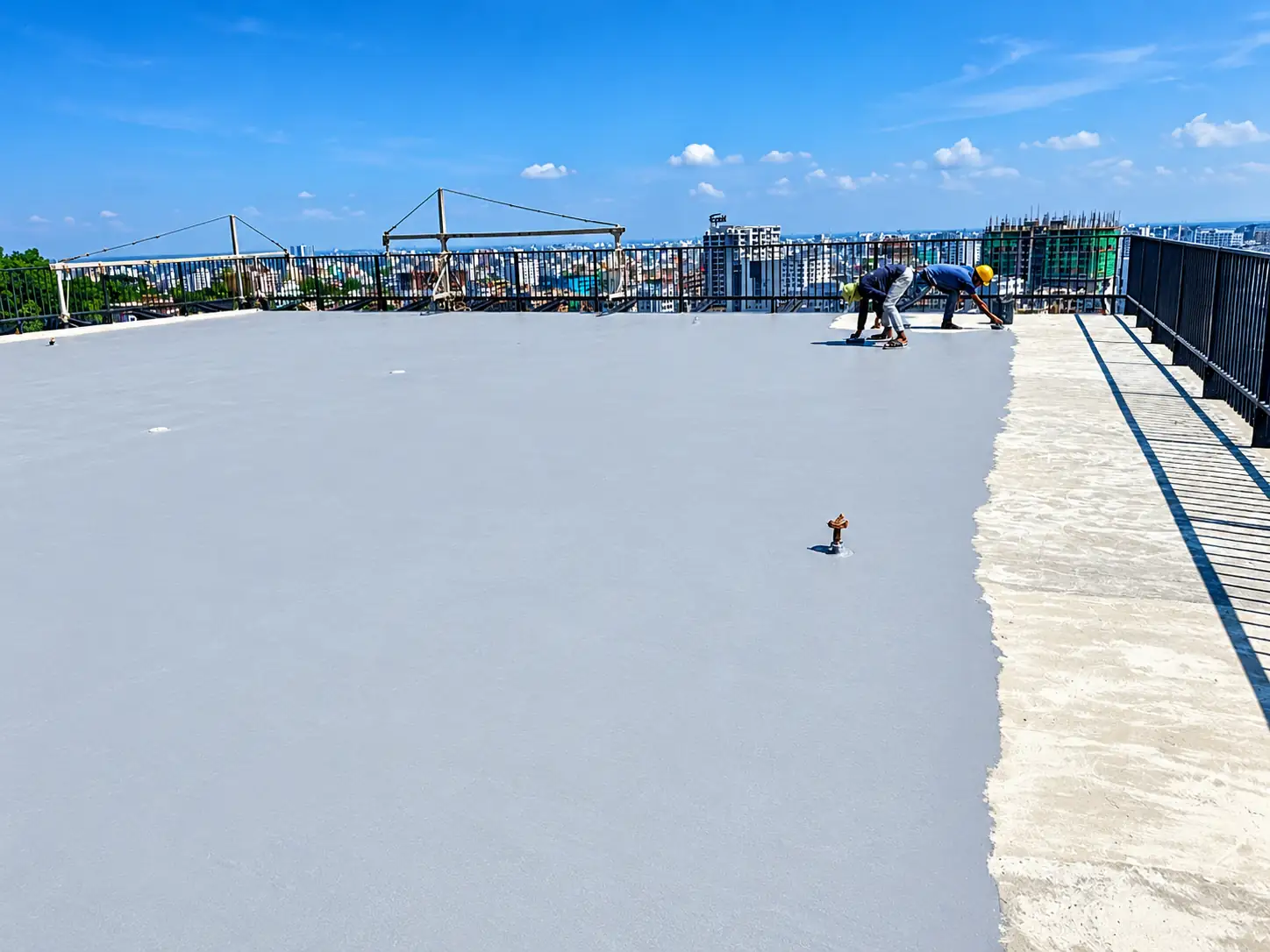
Why Bangladesh's Climate Needs Cementitious Waterproofing
Bangladesh gets heavy monsoon rain for several months a year, high humidity almost year-round and strong summer heat. This constant wet–dry and hot–cold cycle opens hairline cracks in roof slabs and lets water travel into the concrete, causing leakage, peeling paint, damp patches and, over time, rusting of the steel reinforcement.
A properly applied cementitious system seals these pores and cracks and protects the structure’s lifespan. The best time to do it is before the monsoon, because repairing damage after leakage always costs more. For roofs that also get very hot, it can be combined with our heat insulation coating.
Cementitious coatings also suit local building practice well: they bond naturally with the concrete and brick used in most Bangladeshi buildings, and they can be covered with tiles, screed or paint after curing.
Benefits of Cementitious Waterproofing
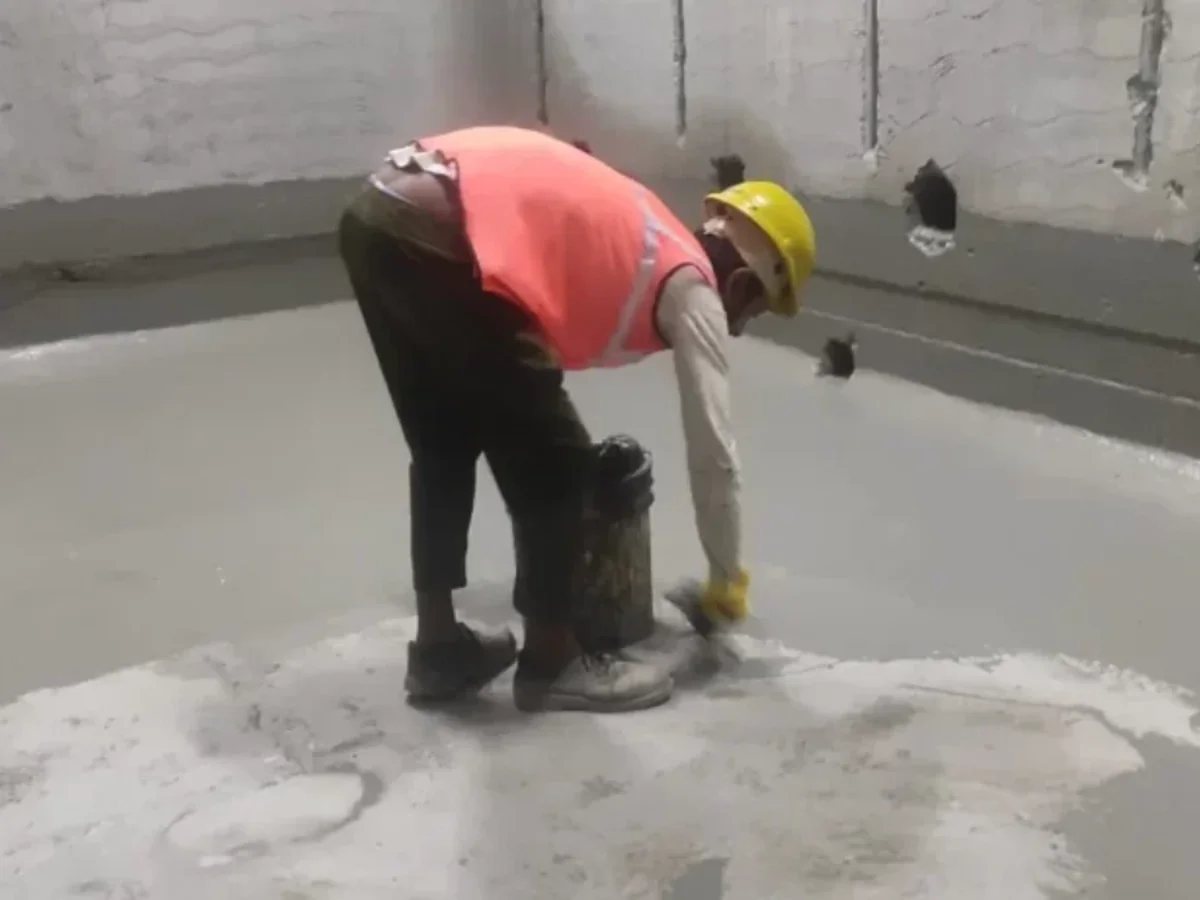
Key Advantages
Strong Bonding with Concrete: Creates excellent adhesion with concrete and masonry surfaces for long-term protection.
Prevents Water Leakage: Stops water seepage, damp walls, and roof leakage effectively.
Ideal for Bangladesh Climate: Performs efficiently under heavy rain, humidity, and wet conditions.
Durable & Low Maintenance: Provides long-term waterproof protection with minimal maintenance requirements after application.
Cost-Effective Waterproofing Solution: An affordable and reliable waterproofing method for residential, commercial, and industrial buildings.
Safe for Water Tanks: Suitable grades can be used inside drinking water reservoirs.
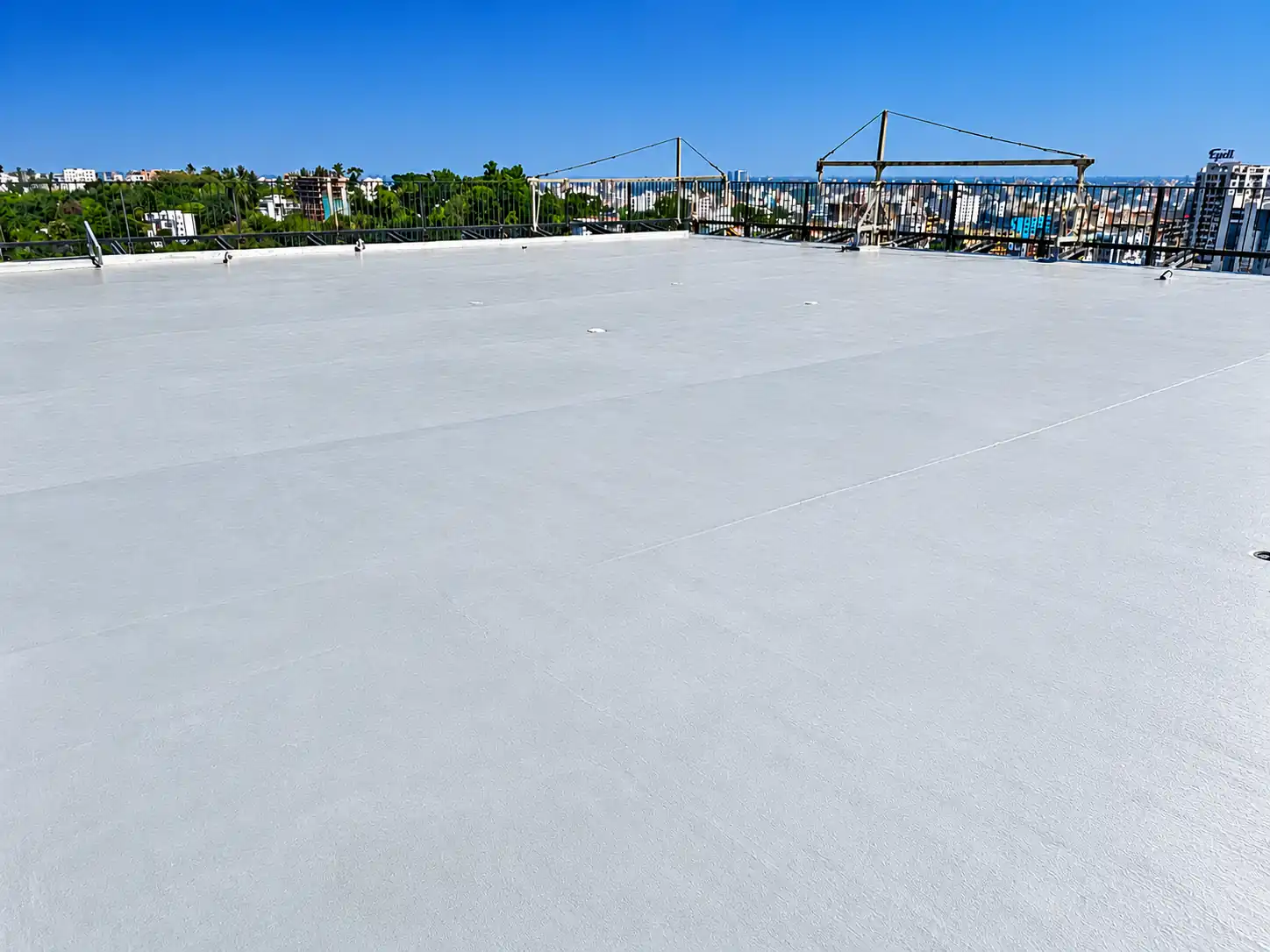
Where We Apply Cementitious Waterproofing
- Roof Waterproofing: Protects concrete roofs from rainwater leakage, surface cracks, and moisture penetration.
Basement Waterproofing: Prevents underground water seepage and protects foundations from dampness and structural damage.
Bathroom & Wet Area Waterproofing: Creates a waterproof protective layer for bathrooms, kitchens, and other wet areas.
Water Tank & Swimming Pool Waterproofing: Ensures leak-proof protection for water-retaining structures and concrete tanks.
Industrial & Commercial Waterproofing: Suitable for factories, warehouses, retaining walls, balconies, and large commercial concrete structures.
Cementitious Waterproofing Price in Bangladesh (D-Seal C200)
For most cementitious waterproofing jobs, Fountech uses and supplies Ducon D-Seal C200, a two-component (2K) polymer-modified cementitious coating. Each 21 kg set has 7 kg of liquid SBR polymer and 14 kg of cement-based powder; mixed together on site, they form a flexible, watertight coating that bonds firmly with concrete and brick. It is formulated to work with locally available sand, cement and water and to cope with Bangladesh’s heavy rain, humidity and heat.
How to Mix and Apply D-Seal C200
- Mixing: 7 kg liquid polymer (SBR) + 14 kg cement powder – mix the full set until smooth and lump-free
- Time between coats: 30 minutes to 1 hour, depending on weather
- Drying time: 4–6 hours (touch dry)
- Walking / normal use: after 24 hours
- Tiles or screed on top: after 24 hours
Where D-Seal C200 Should Not Be Used
D-Seal C200 is designed for concrete, brick and plastered masonry. Do not apply it on wood, iron/steel or metal profile sheets, because a cement-based coating cannot bond properly to these surfaces. For metal roofs and other special surfaces, ask us about our polyurea or polyurethane systems.
- Wood surfaces
- Iron / steel surfaces
- Metal profile sheets
Cementitious Waterproofing Chemical for Roof, Bathroom, Wall & Concrete
D-Seal C200 is one of the most versatile waterproofing chemicals in Bangladesh. The same cement-based coating can be used on most concrete and masonry surfaces in a building:
Bathroom Waterproofing Chemical
Applied on bathroom and kitchen floors and up the walls before tiling, to stop seepage into lower floors and neighbouring rooms.
Wall Waterproofing & Damp Proofing
Used as a damp-proofing coat on basement walls, wall bases and wet internal walls. For outside walls, use a breathable water repellent.
Waterproofing for Concrete & Water Tanks
Bonds directly with concrete to protect water tanks, lift pits, retaining walls and slabs from water ingress and steel corrosion.
Our Step-by-Step Application Process
A waterproofing job is only as good as its preparation. Fountech follows a clear, step-by-step method on every site so the coating bonds properly and stays leak-free:
- Site inspection – We find the real source of leakage and measure the area.
- Surface preparation – Loose plaster, dust, oil and old coatings are removed and the surface is cleaned.
- Crack & joint repair – Cracks are opened and filled with repair mortar; wall–floor joints are rounded (coving).
- Pre-wetting – The surface is dampened so the coating bonds properly.
- First coat – Cementitious coating is applied by brush or spray.
- Second coat – Applied crosswise 30 minutes to 1 hour after the first coat (depending on weather) for even thickness.
- Curing – Kept moist for the required period to reach full strength.
- Water ponding test – The treated area is water-tested to confirm there is no leakage.

Cementitious vs Other Waterproofing Methods
| Method | Best for | Flexibility | Relative cost |
|---|---|---|---|
| Cementitious | Water tanks, bathrooms, basements, roofs (flexible grade) | Low–Medium | Low |
| Polyurethane (PU) | Exposed roofs, balconies | High | High |
| Bituminous membrane | Roofs, foundations | High | Medium |
| Acrylic coating | Roofs, walls | Medium–High | Medium |
| Polyurea spray | Heavy-duty roofs, tanks, industrial areas | Very high | High |
Not sure which system fits your building? Our engineers will recommend one after a site inspection.
Waterproof Cement vs Cementitious Waterproofing Coating
Many people confuse waterproof (water-resistant) cement with cementitious waterproofing, but they do different jobs:
| Waterproof cement | Cementitious waterproofing coating | |
|---|---|---|
| What it is | Cement with water-repellent additives, used in place of normal cement | A polymer-modified cement coating (e.g. D-Seal C200) applied on the finished surface |
| When it is used | During construction – in concrete, plaster and mortar | On new or existing structures, including old leaking roofs and tanks |
| Seals existing cracks? | No | Yes – after crack repair, it seals pores and hairline cracks |
| Best for | Reducing water absorption in new work | Stopping leakage on roofs, bathrooms, water tanks and basements |
For the best protection, they can be used together: waterproof cement during construction, and a cementitious coating on the surfaces that face water.
Signs You Need Waterproofing & Aftercare Tips
Signs Your Building Needs Waterproofing
- Damp patches or water marks on ceilings and walls
- Paint peeling, bubbling or flaking
- White salt deposits (efflorescence) on plaster or brick
- Musty smell, mould or fungus in rooms
- Water dripping or seeping after rain
- Cracks on the roof slab or leaks around the water tank
Aftercare: Keep Your Waterproofing Working
- Wait 24 hours before walking on it, tiling or adding screed
- Protect exposed roof coating from heavy traffic and sharp objects
- Keep roof drains and outlets clean so water does not stand
- Do not drill or cut through the coating without resealing
- Inspect the roof every year before the monsoon
- Repair new cracks early before water gets in

Why Choose Fountech For Cementitious Waterproofing?
Fountech has been working in Bangladesh’s construction sector since 2006. We combine experienced applicators with quality construction chemicals, careful surface preparation and on-site testing, so the waterproofing lasts.
- Experienced waterproofing team using advanced methods
- Premium construction chemicals
- Careful crack repair and surface preparation before coating
- Technical support after the job
- Suitable for both new construction and repair of old leaking structures
- Right system recommended for each surface: roof, bathroom, tank or basement
- Service in Dhaka and across Bangladesh for homes, apartments, factories and commercial buildings
See our completed work on the projects page, or contact us for a site inspection and quotation.
Frequently Asked Questions
What is the best waterproofing method for concrete roofs?
Cementitious waterproofing is one of the best waterproofing methods for concrete roofs because it creates a durable and seamless waterproof barrier.
How long does cementitious waterproofing last?
With quality materials, proper surface preparation and correct curing, cementitious waterproofing can last many years. Its life depends on surface condition, exposure to sun and foot traffic, and whether the coating is protected by tiles or a screed.
Is cementitious waterproofing suitable for bathrooms?
Yes. Cementitious waterproofing is highly suitable for bathrooms, kitchens, and other wet areas.
Can cementitious waterproofing stop leakage?
Yes. It effectively prevents water leakage, seepage, and dampness in concrete structures.
What is the cementitious waterproofing price in Bangladesh?
Cementitious waterproofing price in Bangladesh depends on the area size, surface condition, crack repair needed, number of coats and the product used. Prices are usually quoted per square foot after a site inspection. Contact Fountech for an exact quotation for your project.
How long does cementitious waterproofing take to dry?
With D-Seal C200, each coat is touch dry in about 4–6 hours. The second coat is applied 30 minutes to 1 hour after the first, depending on weather. The area can be walked on, tiled or covered with screed after 24 hours.
Can cementitious waterproofing be applied on wood, iron or metal sheets?
No. Cementitious waterproofing is made for concrete, brick and plastered masonry. It does not bond properly to wood, iron/steel or metal profile sheets. For metal roofs, a polyurea or polyurethane system is a better choice.
When can tiles be laid after waterproofing?
Tiles or a protective screed can be laid 24 hours after the final coat of D-Seal C200, once the coating has set properly.
How do you mix D-Seal C200?
Each 21 kg set has 7 kg of liquid SBR polymer and 14 kg of cement-based powder. The full set is mixed together until smooth and lump-free, then applied in two coats by brush.
Cementitious or PU waterproofing – which is better?
Cementitious waterproofing is more cost-effective and ideal for water tanks, bathrooms, basements and roofs that will be covered with tiles or screed. PU waterproofing is more flexible and better for fully exposed roofs with movement. We recommend the right system after a site inspection.