

Heavy-Duty Industrial Flooring Solutions in Bangladesh
Industrial flooring is a specialized flooring system engineered to withstand the demanding conditions of factories, warehouses, manufacturing plants and heavy-duty commercial facilities. It handles heavy traffic, machinery, chemical exposure, abrasion and moisture while providing durability, safety, hygiene and long-term performance.
Fountech provides professional industrial flooring solutions in Bangladesh, including Epoxy, Polyurethane (PU), ESD, polished concrete, super-flat flooring and floor hardener systems. With more than 20 years of experience, 2,000+ completed projects and over 15 million sq ft of flooring installed, we check your slab first and recommend only the system your floor needs.
Call +880 1844-652497 · Serving Dhaka, Gazipur, Chattogram, EPZs & Across Bangladesh
Best Industrial Floor for Your Factory
Over 20 years of trusted expertise in industrial flooring in Bangladesh since 2006. Each system below is built for a different load, chemical and hygiene need. Not sure which one fits? Compare them side by side.

Polyurethane (PU) flooring is a flexible, durable flooring system with excellent resistance to chemicals, hot water wash, thermal shock and abrasion.
Best for: Food, beverage, pharma, chemical plants

Epoxy flooring creates a seamless, hard-wearing surface with excellent resistance to heavy traffic, abrasion, stains and chemical spills.
Best for: Factories, warehouses, garments units

Polished concrete provides a smooth, durable and attractive surface for high-traffic areas, improving both the performance and appearance of concrete floors.
Best for: Showrooms, retail, warehouses

Electrostatic Discharge (ESD) flooring controls static electricity and protects sensitive electronic components and equipment.
Best for: Electronics, cleanrooms, laboratories
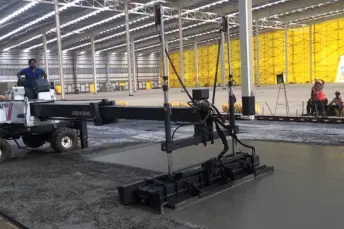
Super flat flooring provides an exceptionally level surface for high-precision warehouse operations, forklifts and automated material handling.
Best for: High-rack and VNA warehouses

Floor hardener is applied to fresh concrete to improve surface strength, abrasion resistance and durability in heavy-traffic areas.
Best for: New slabs, warehouses, production areas

Anti-skid epoxy and PU coatings for basements, ramps and multi-storey parking that resist tyre wear, oil and water.
Best for: Basements, ramps, garages

A thin, budget-friendly epoxy paint layer that seals concrete, stops dusting and makes floors easy to clean. Ideal for light-traffic areas and quick upgrades.
Best for: Stores, workshops, light-traffic areas

Not Sure Which Floor You Need?
Every slab, load and chemical exposure is different. Our engineer visits your site, tests the slab and recommends the right system with a written price, free of cost.
Free site inspection across Dhaka, Gazipur, Chattogram and EPZs
Epoxy vs PU vs Floor Hardener
A quick guide to the main industrial flooring systems in Bangladesh. The final choice depends on your slab test, loads, chemicals and cleaning routine.
Swipe left to see all columns →
| System | Best for | Chemical resistance | Heavy load | Heat / hot wash | Key advantage |
|---|---|---|---|---|---|
| Epoxy | Factories, warehouses, garments | High | High | Medium | Seamless, glossy, easy to clean |
| PU (PU concrete) | Food, beverage, pharma, chemical | Very high | High | Very high | Handles hot wash and thermal shock |
| ESD | Electronics, cleanrooms, labs | Medium | Medium | Medium | Controls static discharge |
| Floor Hardener | New slabs, warehouses, workshops | Low | Very high | High | Applied on fresh concrete |
| Polished Concrete | Showrooms, retail, warehouses | Low | High | High | Low maintenance, natural look |
| Super Flat | High-rack and VNA warehouses | Low | Very high | High | Precise level for forklifts and AGVs |
Flooring Solutions for Every Industry
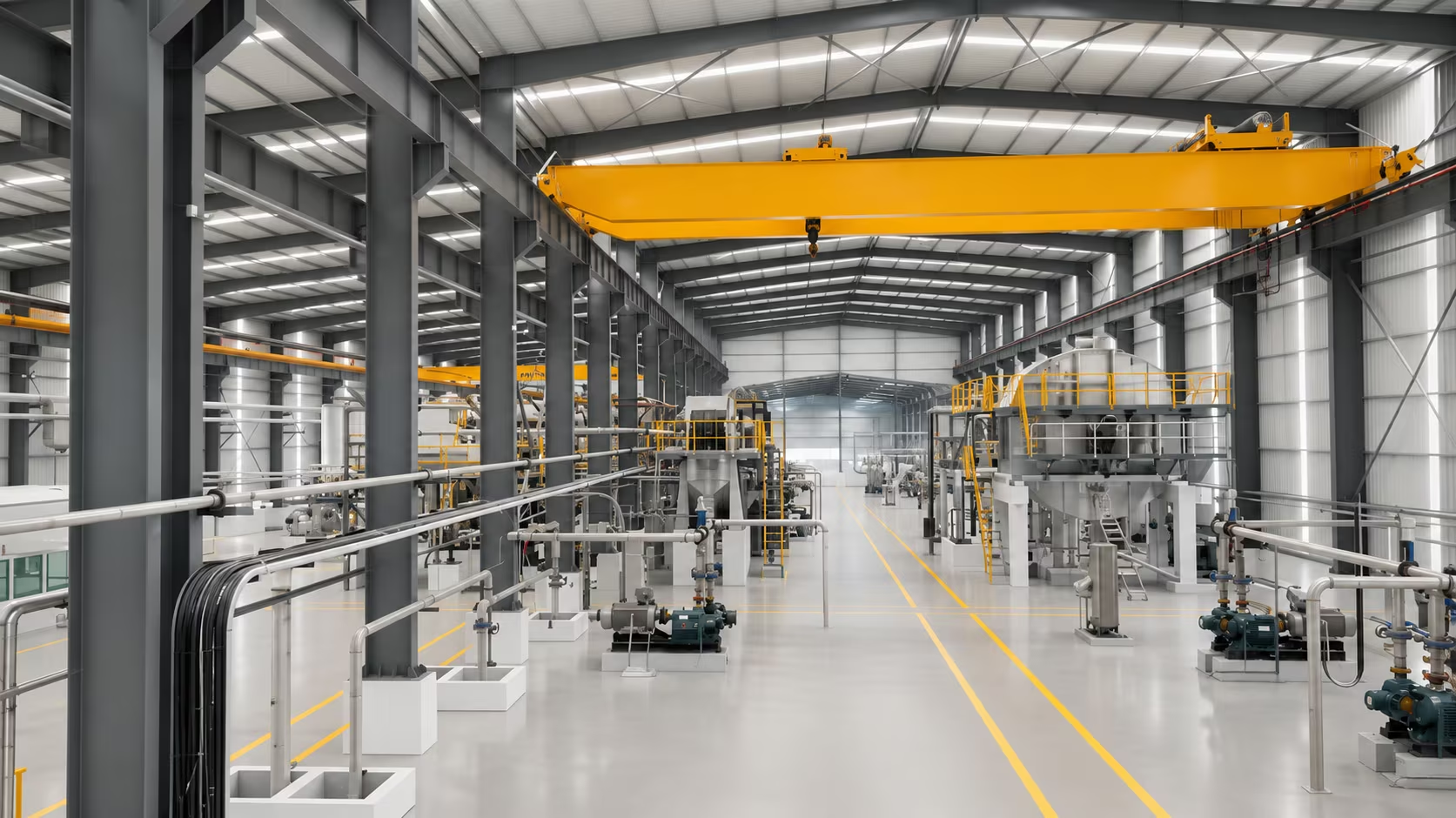
Factories & Production Plants
High-strength floors for heavy machinery, forklifts and 24/7 operations, without cracking, chipping or dusting.
Recommended: Epoxy · Floor Hardener
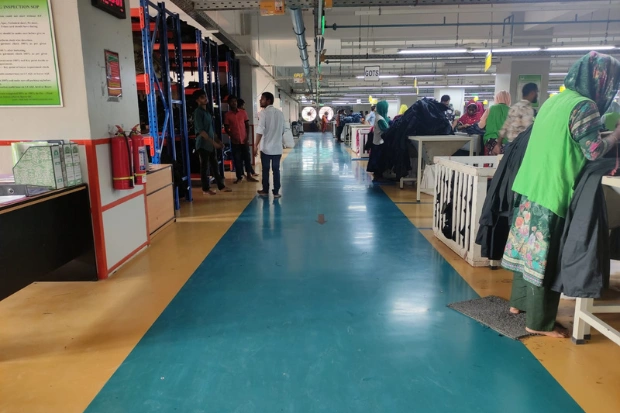
Garments & Textile Industries
Dust-free, easy-to-clean floors for garment factories and textile mills that help you pass buyer and compliance audits.
Recommended: Epoxy Self-Leveling
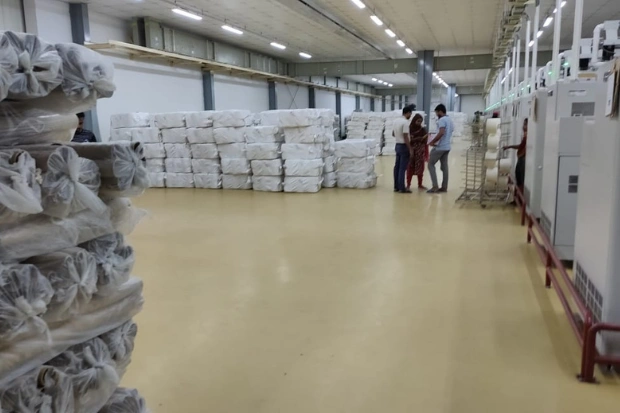
Warehouses & Distribution Centers
Flat, hard-wearing floors for racking, forklifts and automated equipment, for safer and faster warehouse operations.
Recommended: Super Flat · Floor Hardener
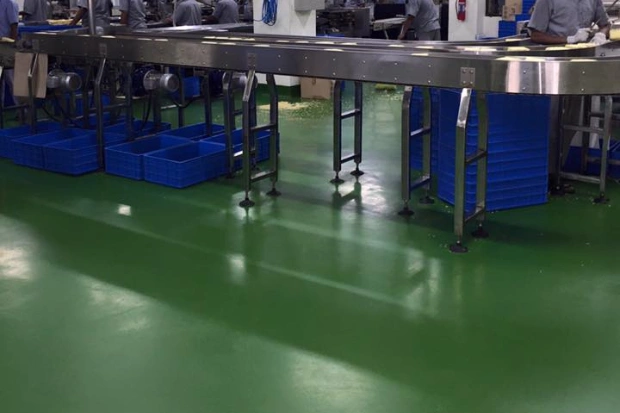
Food & Beverage Processing
Hygienic, seamless floors that resist hot water wash, acids and chemical spills to meet strict food safety standards.
Recommended: PU Flooring
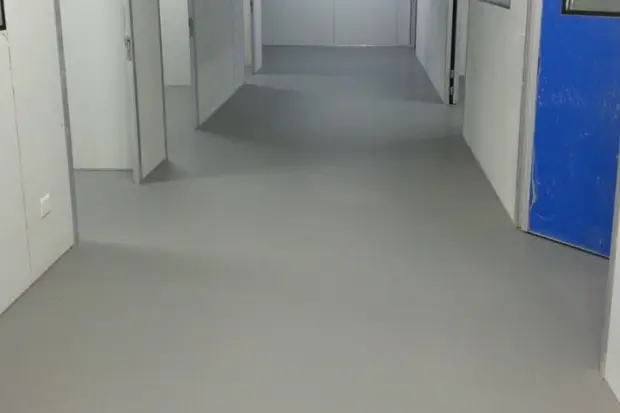
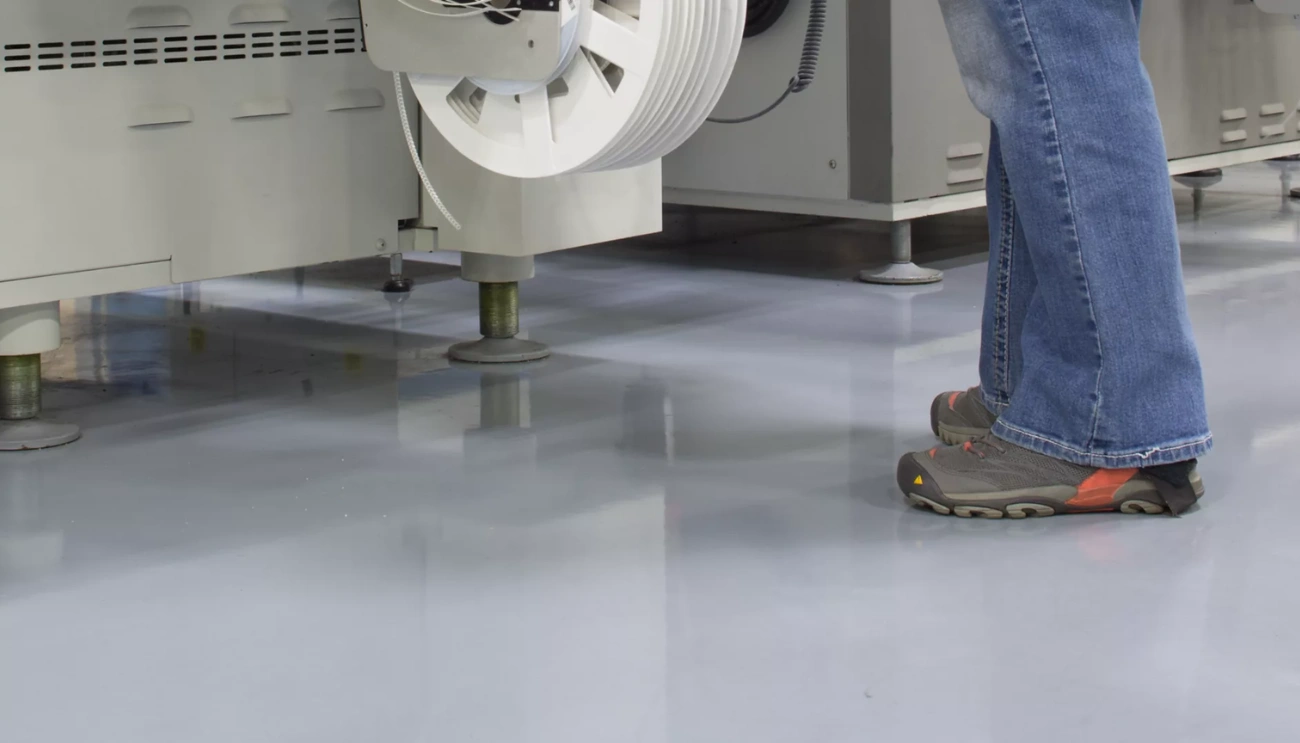
Electronics & Cleanrooms
Static-control floors that protect sensitive electronic components and keep production environments safe.
Recommended: ESD Flooring
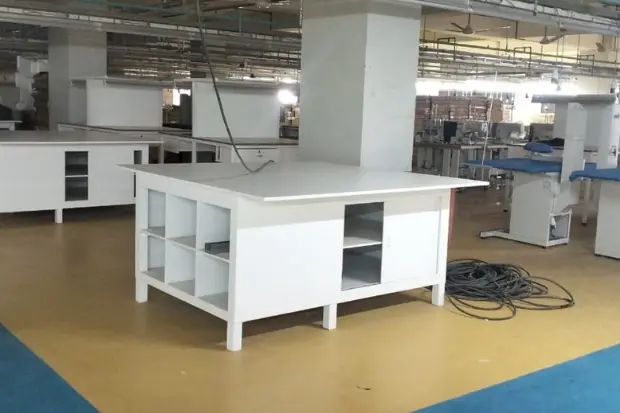
Retail Showrooms & Commercial Spaces
Attractive, durable floors that are easy to maintain in high-traffic retail and commercial spaces.
Recommended: Polished Concrete
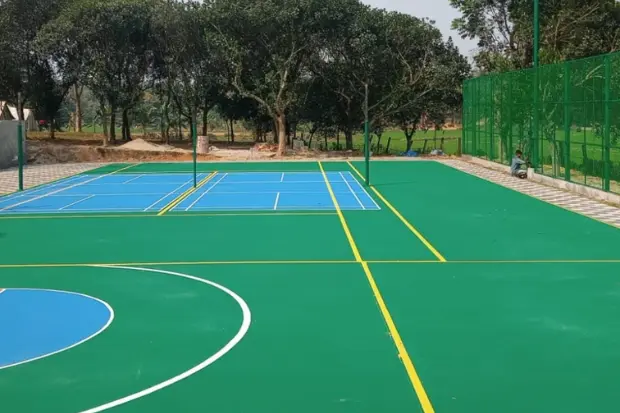
Sports Floors & Recreation Centers
Shock-absorbing, slip-resistant floors for gyms, courts and stadiums that improve comfort and reduce injuries.
Recommended: Sports Flooring
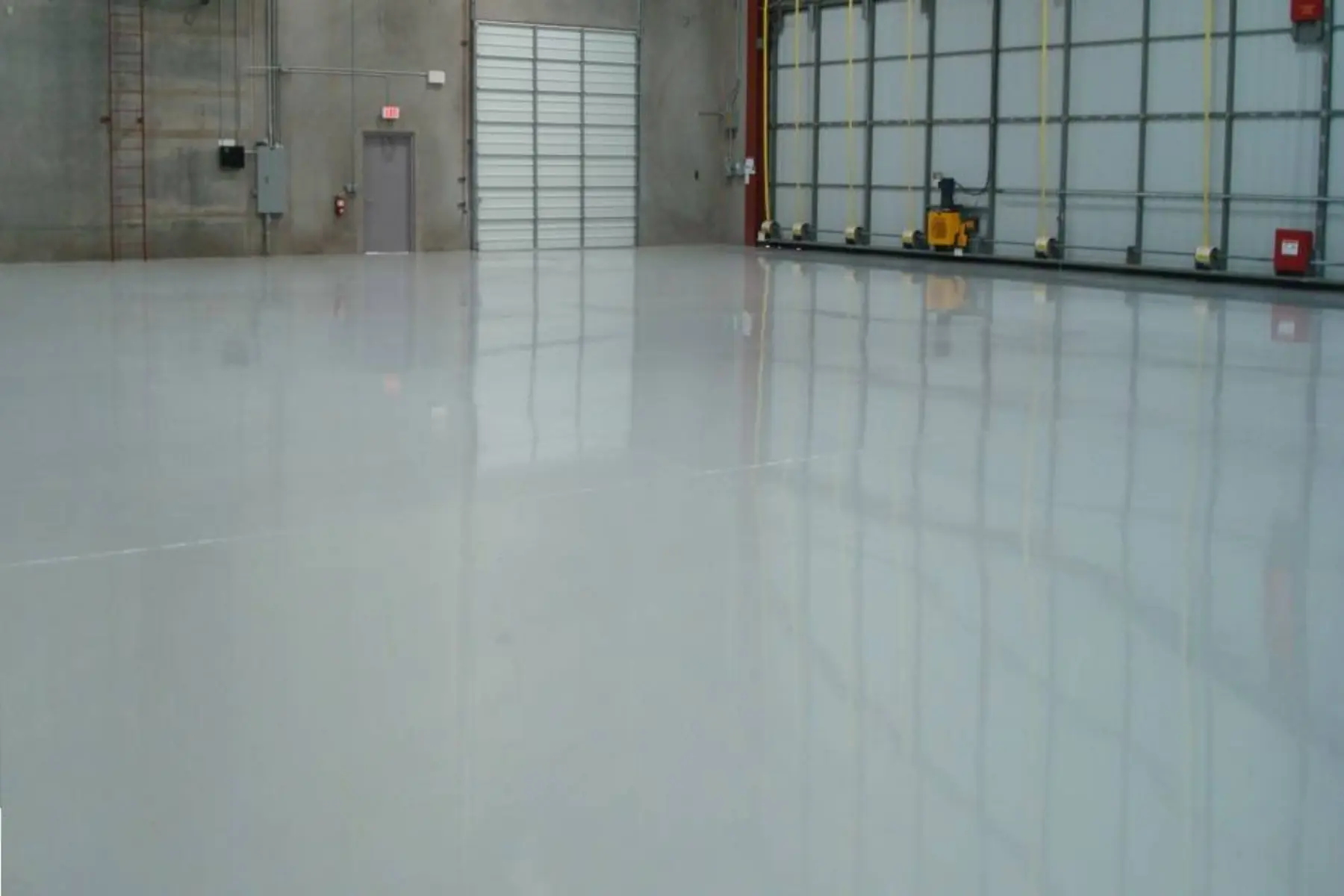
Benefits of Industrial Flooring
Less Downtime
Fast-cure systems let you reopen production areas quickly, with minimal disruption.Pass Audits
Seamless, dust-free surfaces help meet buyer, compliance and GMP floor requirements.Lower Repair Cost
Long service life means no more patching cracked and dusting concrete every season.Safer Workers
Anti-slip finishes reduce slip hazards in wet, oily and loading areas.Chemical & Hygiene Protection
Resists oils, acids and solvents, and is easy to clean for food, pharma and healthcare.
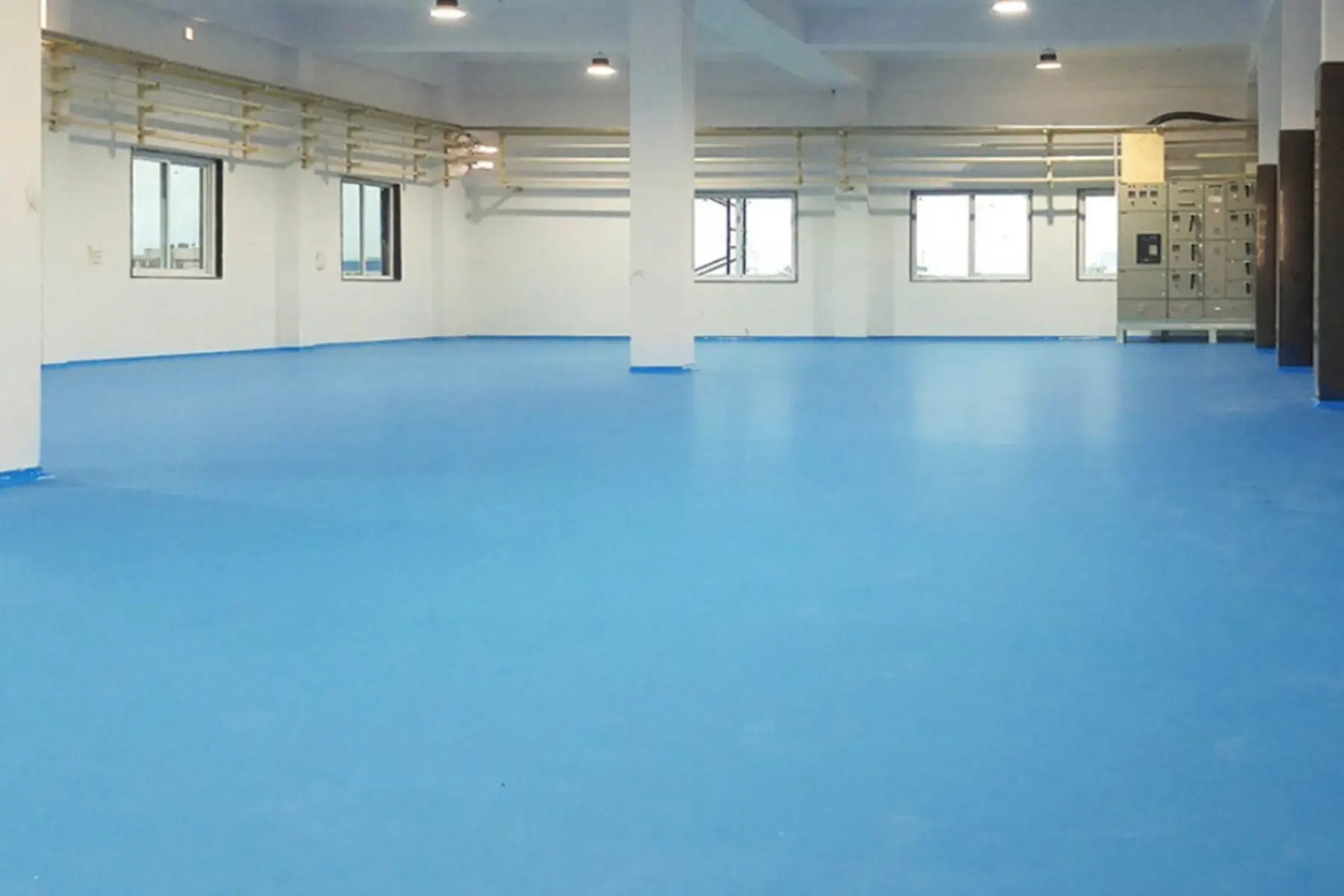
Which System Works Where
Manufacturing Plants
Heavy machinery and forklift traffic: epoxy flooring or floor hardener.Warehouses
Racking, forklifts and material handling: super flat flooring.Food Processing Units
Hot wash, chemicals and temperature change: PU flooring.Pharmaceutical Plants
Clean, seamless production zones: PU or epoxy self-leveling systems.Automotive & Parking
Oil, grease and vehicle traffic: car parking flooring.
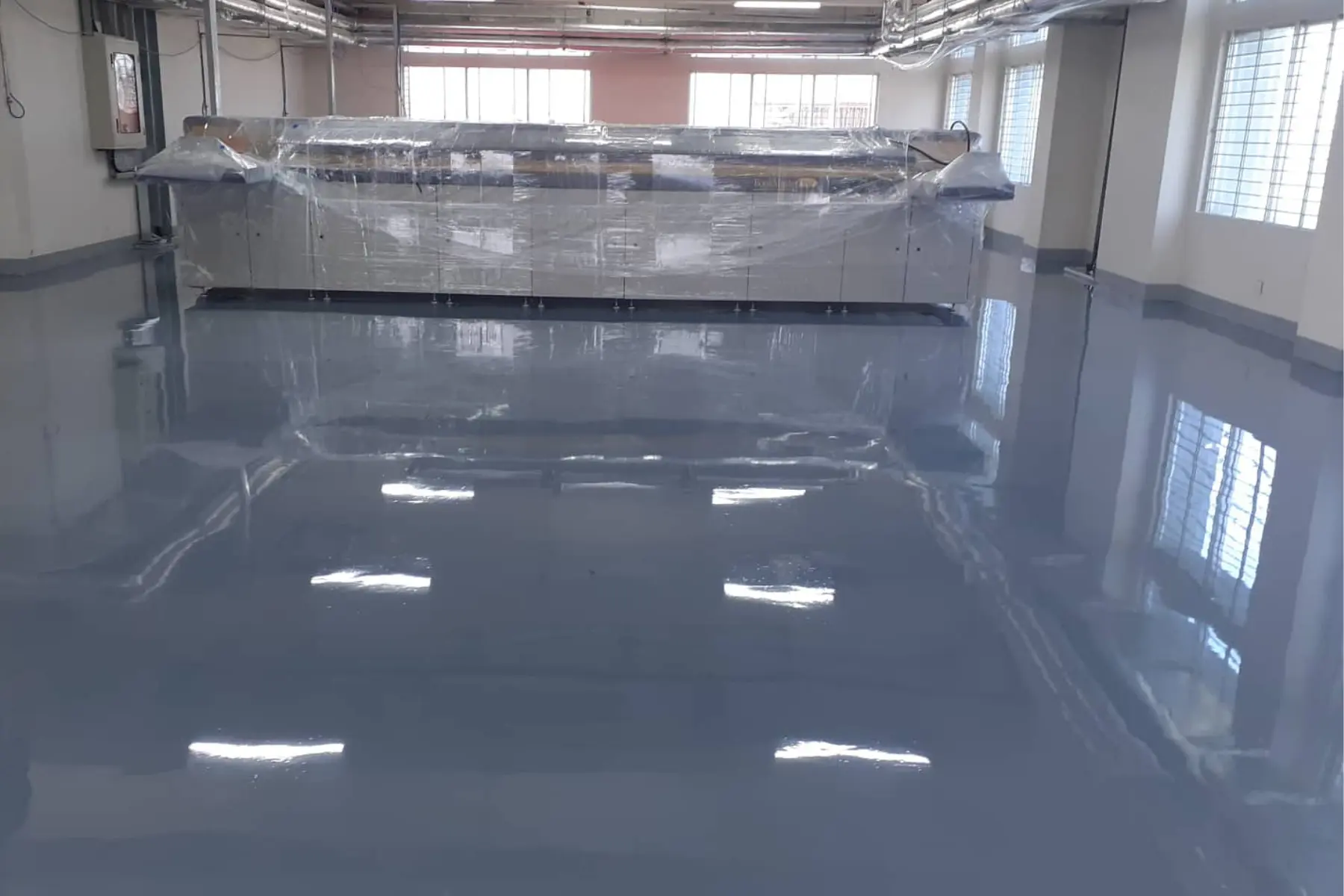
Key Features of Industrial Flooring
High Load-Bearing Capacity
Supports forklifts, heavy machinery and stacked inventory without damage.Seamless & Smooth Surfaces
No joints for dirt to collect; fewer trip hazards and faster cleaning.Thermal Resistance
Handles cold storage and heat-intensive operations.Quick Curing Time
Minimizes downtime during installation or repair.Low-VOC Options
Safer systems that support green building requirements.
Key Technical Features of Industrial Flooring
Industrial flooring systems are designed with specific technical properties to meet demanding operating conditions. Key characteristics include load-bearing capacity, abrasion and chemical resistance, slip resistance, seamless finishes, thermal resistance, hygiene, and long-term durability. The right flooring system is selected based on the specific requirements of each facility and its operating environment.
Signs Your Factory Floor Needs Repair
Check your floor today. If you see two or more of these signs, it is time for a professional inspection.
- White dust on machines and products
- Cracks or potholes on forklift routes
- Oil and chemical stains that won't clean
- Peeling or bubbling old coating
- Slippery wet areas near wash or loading zones
- Buyer or auditor comments on floor condition
Repairs usually get more expensive the longer you wait. Our engineer will inspect your floor, test the slab and give you a written recommendation with price, free of cost.
Our Industrial Flooring Process
A clear five-step process from first visit to handover, so you always know what happens next.
Free Site Visit
Our engineer checks your slab, traffic, machinery loads and chemical exposure.
Slab Testing
Moisture and strength tests confirm the slab is ready, or what repair it needs.
Written Proposal
The right system, thickness, price and timeline, in writing.
Installation
Area-by-area, shift-wise work so your production keeps running.
Handover
Final inspection, warranty and a simple floor care guide.
Industrial Flooring Price in Bangladesh
Industrial flooring costs primarily vary depending on the product type, thickness (1mm, 2mm, 3mm, 4mm, etc.), site conditions, slab conditions, total project area, and special requirements (such as anti-slip or chemical-resistance).
Epoxy Flooring: Generally ranges from ৳90 to ৳450+ per square foot with application charges included, varying by thickness (1mm to multi-millimetre) and system quality, while specialized or 3D epoxy can cost more.
Polyurethane (PU) Flooring / PU Concrete: Typically ranges from ৳60 to ৳370+ per square foot with application charges, depending on thickness (1mm, 2mm, 3mm, 4mm+) for food processing, pharmaceutical, or heavy-impact factories.
Floor Hardener: Generally ranges between ৳45 and ৳90 per square foot with application charges for metallic, non-metallic, or liquid hardeners used during new concrete casting.
Decorative Floor & Special Finishes: Cost more depending on thickness, design complexity, and special features like anti-slip, ESD, or food-grade finishes with application charges.
Other Factors: Old, cracked, or damp slabs increase costs for grinding and repairs, whereas larger total areas usually lower the cost per square foot.
Common Questions About Industrial Flooring
1.What does industrial flooring cost in Bangladesh?
Industrial flooring is priced per square feet. The cost depends on the system (epoxy, PU or floor hardener), thickness, slab condition, total area and any special finish. Fountech gives an exact written quote after a free site inspection.
2.Which is better for a factory: epoxy or PU flooring?
Epoxy suits dry factories, warehouses and garment units with heavy traffic. PU flooring handles hot water wash, thermal shock and strong chemicals better, so it is the usual choice for food, beverage and pharmaceutical plants.
3.How long does industrial epoxy flooring last?
A properly installed epoxy floor lasts many years in industrial use. Its life depends on thickness, traffic, chemical exposure and cleaning. Thicker self-leveling and mortar systems last longer than thin coatings.
4.Can you install flooring without stopping production?
Yes. Fountech works area by area and shift-wise, and uses fast-curing systems where needed, so most of your plant keeps running while each section is completed.
5.Can epoxy be applied on an old or cracked concrete floor?
Yes, after proper preparation. The surface is ground, cracks and potholes are repaired, and moisture is tested first. Damp slabs may need a moisture-tolerant primer or a PU system.
6.Which flooring is best for garment factories?
Most garment factories use epoxy self-leveling or epoxy coating systems. They stop concrete dust, are easy to clean and help factories pass buyer and compliance audits.
7.Which flooring is best for warehouses?
Warehouses usually need a hard, flat surface. Floor hardener on a new slab, or super flat flooring for high racking and narrow-aisle forklifts, gives the best long-term performance.
8.Does Fountech provide industrial flooring outside Dhaka?
Yes. Fountech installs industrial flooring across Bangladesh, including Gazipur, Savar, Narayanganj, Chattogram and the EPZs.