

What Is Conductive (ESD) Flooring?
Conductive ESD flooring is a seamless epoxy or PU floor that carries static charge from people, trolleys and machines safely to earth through a conductive layer and a copper grounding grid. Fountech installs ESD epoxy and PU flooring in Bangladesh for electronics, pharmaceutical, data centre and cleanroom facilities, tested to ANSI/ESD S20.20 and IEC 61340-5-1.
Why Your Facility Needs ESD Flooring
A person walking across an ordinary floor can build up several thousand volts without feeling a thing, yet many electronic components can be damaged by a discharge of less than 100 volts. The damage is often invisible: a board passes QC and fails months later in the customer’s hands. In pharmaceutical plants, solvent stores and battery lines, a static spark can also ignite vapour or dust.
An ESD floor removes that charge the moment it forms. Used with ESD footwear, it keeps body voltage below 100 V, the limit set by ANSI/ESD S20.20, protecting your products, your people and your reputation.


Fountech Conductive ESD Epoxy & PU Flooring Systems
Fountech is the authorized distributor of VIACOR (Germany) in Bangladesh. Our flagship VIASOL UNIVERSAL VOLTEX conductive system is already in service at the Bangladesh E-Passport Data Center and in several multinational electronics plants, so you are choosing a floor with a proven local track record, not just a datasheet.
Our ESD flooring is available as:
- Conductive epoxy coating systems
- Conductive polyurethane (PU flooring)
- Self-levelling conductive floor screeds
- Conductive primer + ESD topcoat systems
Choosing the Right ESD Flooring System
There is no single “best” ESD floor. A server room, an SMT line and a solvent store each need a different resistance range, thickness and finish. Before recommending a system, our engineers check the concrete condition and moisture level, the resistance range your process needs, trolley and forklift traffic, chemical exposure and site humidity. Every Fountech ESD floor is tested to ANSI/ESD S20.20 and IEC 61340-5-1 before handover, so you get reliable static control and long-term durability.
Conductive Floor
- Electrical Resistance: 25,000 Ω – 1 MΩ
- Discharge Speed: Rapid (immediate)
- Best For: Explosive and hazardous areas
- Compressive Strength: > 60 N/mm²
- Applicable Standard: ANSI/ESD S20.20, IEC 61340-5-1
- Expected Lifespan: 10–20 years
Static Dissipative Floor
- Electrical Resistance: 1 MΩ – 1,000 MΩ
- Discharge Speed: Controlled (gradual)
- Best For: Electronics manufacturing and sensitive environments
- Compressive Strength: > 60 N/mm²
- Applicable Standard: ANSI/ESD S20.20
- Expected Lifespan: 10–20 years
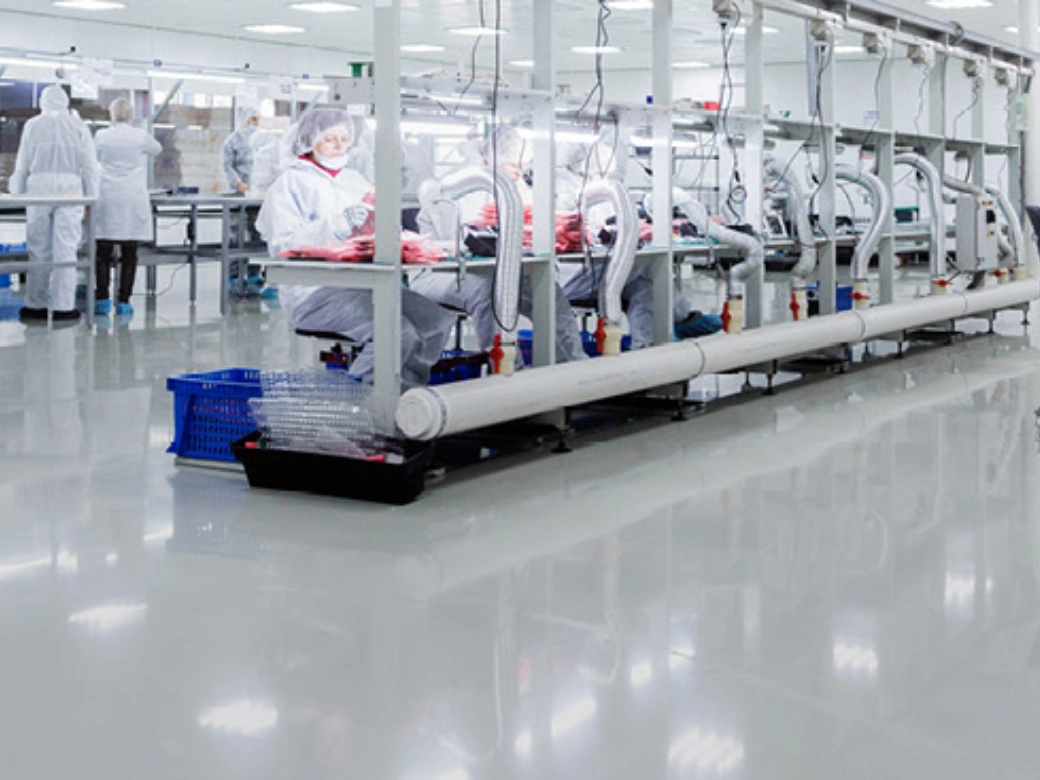
Key Benefits of ESD Epoxy & PU Flooring
Reliable Static Control
Drains charge from people and equipment in a controlled way, every shift.
Fewer Hidden Defects
Cuts latent ESD damage that leads to field failures and warranty returns.
Seamless & Hygienic
No joints for dust or bacteria to collect, ideal for cleanrooms and GMP pharma areas.
Chemical & Wear Resistant
Handles trolleys, forklifts, solvents and daily cleaning.
Stable Conductivity
Performance stays consistent for the life of the floor when maintained correctly.
Low Maintenance
Easy cleaning with neutral, ESD-safe cleaners. No wax, which would block conductivity.
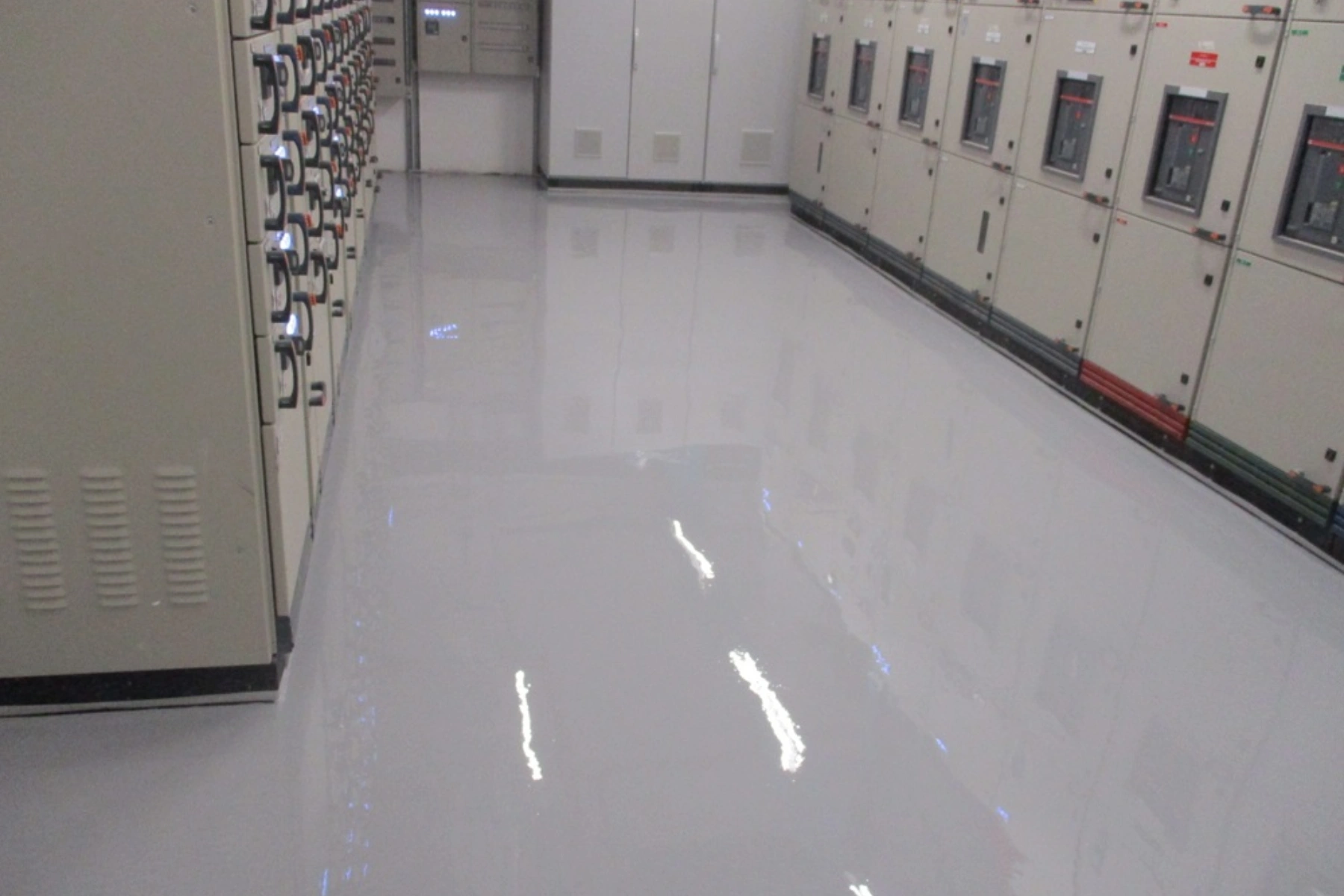
Where ESD Flooring Is Used
Industry
Why ESD Matters
Electronics & SMT
Prevents damage to ICs and PCBs
Semiconductor & LED
Protects sensitive devices
Pharmaceutical Plants
Controls static in solvent areas
Laboratories
Protects precision instruments
Cleanrooms
Seamless, dust-free static control
Data Centers
Protects servers and UPS
Hospital OT
Reduces spark risk
Battery & EV
Lowers ignition risk
Why Choose Fountech as Your ESD Flooring Company in Bangladesh
Since 2006, Fountech has delivered specialised conductive ESD flooring for electronics, pharmaceutical, laboratory, healthcare and industrial facilities across Bangladesh, with completed projects in Dhaka, Gazipur, Chattogram and other industrial zones.
One team handles everything from site survey and system design to installation, testing and grounding. As VIACOR’s authorized distributor, we supply genuine German materials, and our crews know local challenges such as monsoon humidity and damp concrete slabs.


ESD Flooring Installation Process
- Site Survey – Check substrate strength, moisture, existing coatings and the resistance range your process needs.
- Surface Preparation – Diamond grinding, crack and joint repair, levelling and dust-free cleaning for strong adhesion.
- Moisture Barrier & Primer – Seal damp slabs, common in Bangladesh, to prevent blistering and delamination.
- Copper Grounding Grid – Lay conductive copper tape and connect it to dedicated earthing points.
- Conductive Base & ESD Topcoat – Apply the conductive epoxy or PU layers to the specified thickness.
- Testing & Handover – Measure resistance to ground per ANSI/ESD STM7.1 and confirm performance.
ESD Flooring FAQs
What is ESD flooring?
ESD (electrostatic discharge) flooring is a conductive or static dissipative floor system that safely drains static charge to earth, protecting sensitive electronics, flammable areas and the people who work there.
Where is conductive ESD flooring used?
Electronics and SMT factories, semiconductor and LED plants, pharmaceutical production, laboratories, cleanrooms, data centres, server rooms, hospital operation theatres and battery manufacturing.
How much does ESD flooring cost in Bangladesh?
The price per square foot depends on the system (epoxy or PU, coating or self-levelling), thickness, floor area and the condition of your existing slab. Fountech carries out a site survey and gives you a detailed quotation, so you pay only for the system your facility actually needs.
Can ESD flooring be installed over an existing floor?
Yes, over properly prepared concrete or a sound existing epoxy floor. We test adhesion and moisture first, because a weak or damp base is the most common reason ESD floors fail.
What is the difference between conductive and static dissipative flooring?
Conductive flooring has lower resistance (below 1 × 10⁶ Ω) and drains charge almost instantly, suited to explosive or hazardous areas. Static dissipative flooring (1 × 10⁶ to 1 × 10⁹ Ω) releases charge in a controlled way and is ideal for electronics assembly.
Do ESD floors need a moisture barrier in Bangladesh?
In most cases, yes. High humidity and moisture rising through concrete can cause blistering and delamination, so we apply a moisture barrier wherever testing shows it is needed.
Which standards does Fountech’s ESD flooring meet?
Our systems are designed and tested to ANSI/ESD S20.20 and IEC 61340-5-1. Fountech is the authorized distributor of VIACOR Germany in Bangladesh.
How long does ESD epoxy flooring last?
With correct surface preparation, professional installation and ESD-safe cleaning, conductive epoxy and PU floors typically last 10–20 years in industrial use.