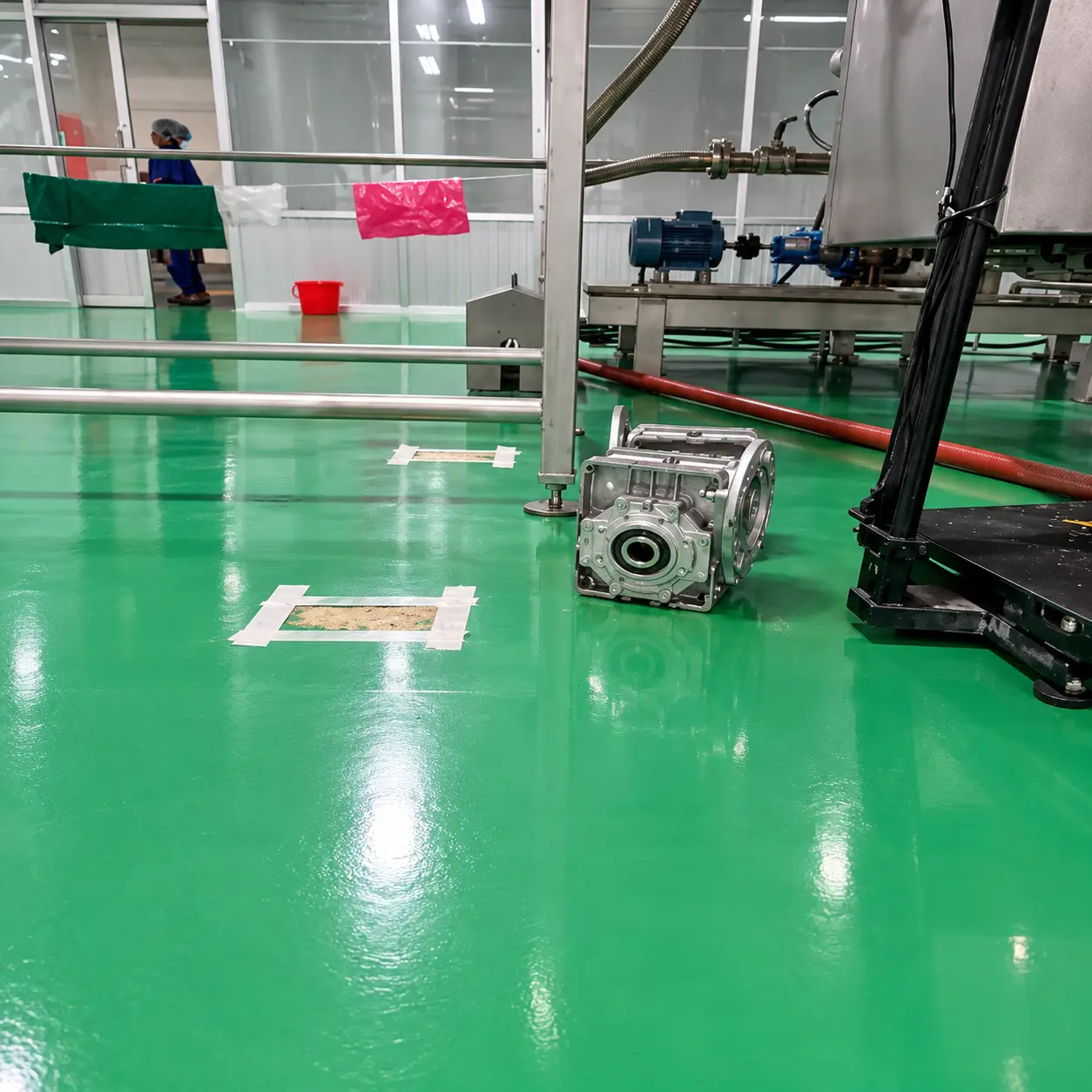
Industrial PU Flooring Solutions in Bangladesh
What Is Industrial Polyurethane (PU) Flooring?
Industrial polyurethane (PU) flooring is a seamless, high-performance resin flooring system designed for industrial environments where durability, flexibility, chemical resistance, hygiene and long-term performance are essential. In simple words, it is a tough, smooth layer laid over concrete that protects the floor and keeps it easy to clean. It withstands heavy traffic, impact, abrasion, chemicals, moisture and temperature changes without cracking.
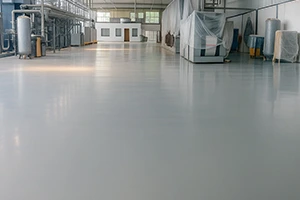
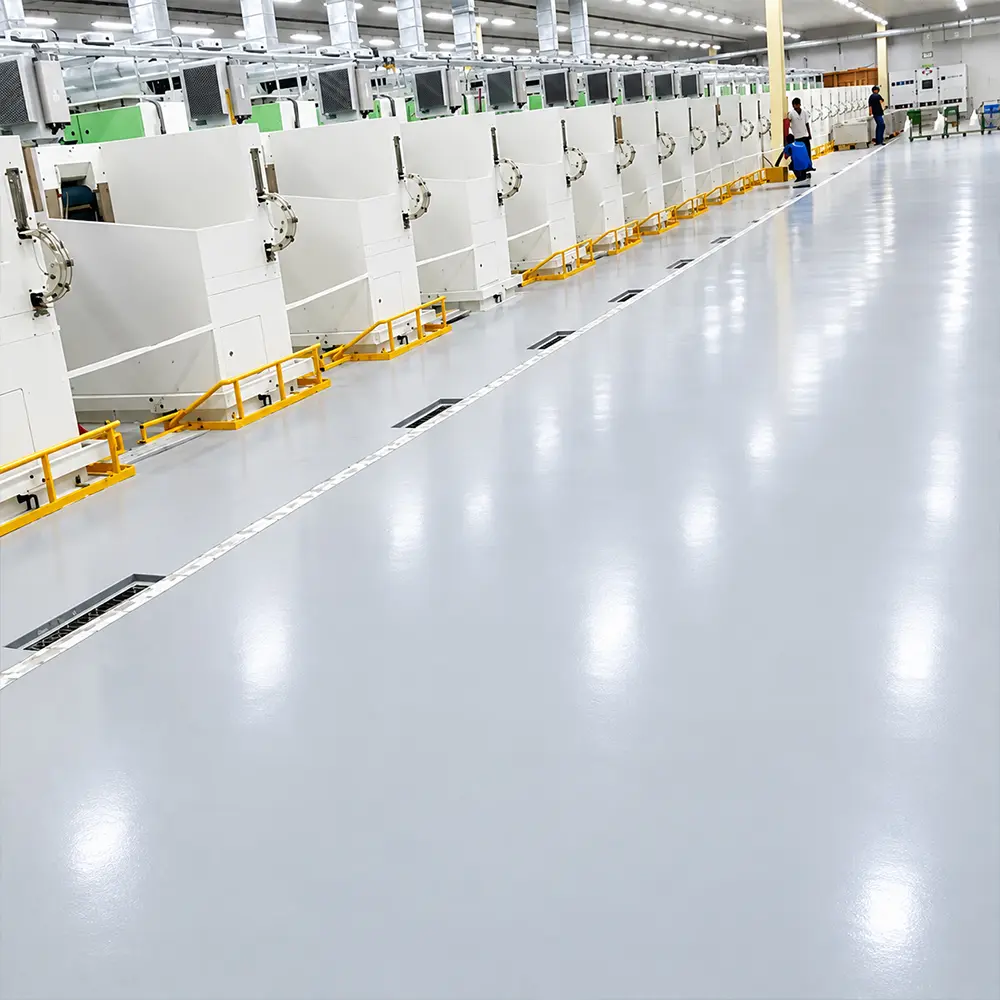
PU flooring is widely used in factories, food and beverage plants, pharmaceutical facilities, cold storage, warehouses and healthcare facilities, where a floor failure means downtime, failed audits or safety risks. It is one of the core systems in our industrial flooring solutions in Bangladesh, backed by more than 20 years of experience and 2,000+ completed flooring projects.
Why Choose PU Flooring?
Many factories in Bangladesh choose PU flooring because it is tough, seamless and lasts where plain concrete or paint fails.
Choose PU flooring if your floor needs to:
- Carry heavy loads: forklifts, trolleys and machines all day.
- Handle heat and cold: hot water cleaning, cold rooms and freezers.
- Resist spills: oil, chemicals, sugar, fat and food waste.
- Stay clean: no joints or gaps where dirt and germs hide.
- Stay safe: anti-slip finish for wet or oily areas.
- Pass audits: hygienic floors for food, pharma and garments.
- Save money: fewer repairs and less downtime over the years.
Not sure if PU is right for your site? Contact Fountech and our team will check your floor and suggest the best option.
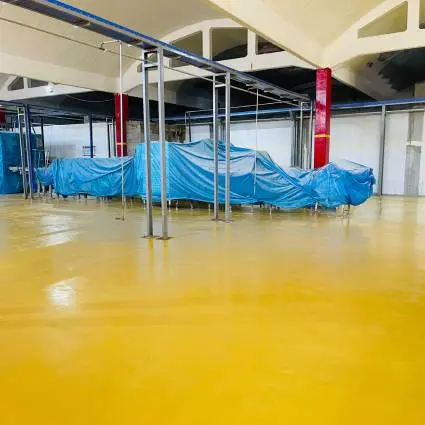
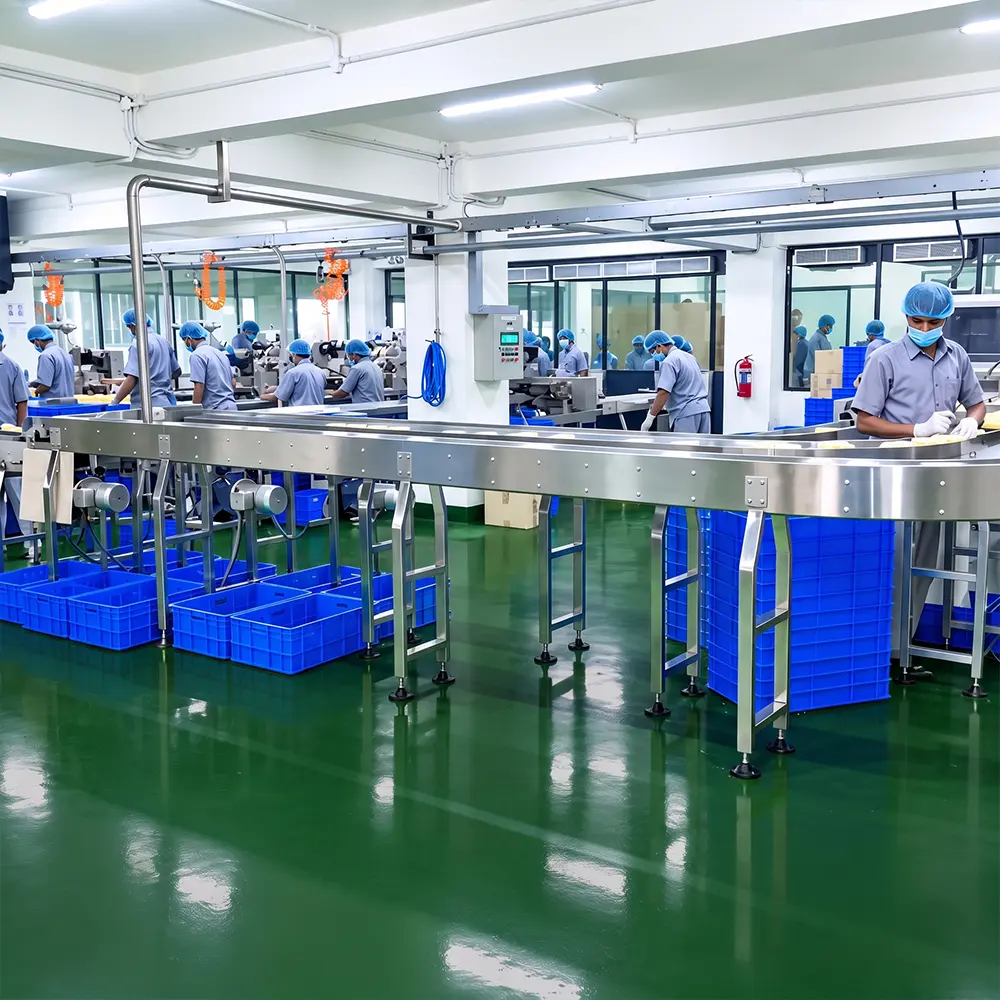
Where Is PU Flooring Used?
Manufacturing Facilities
Withstands heavy machinery, forklift traffic, impact and nonstop work.
Food & Beverage Industry
Seamless, hygienic surfaces that resist organic acids, sugars, fats, hot water and strong cleaning chemicals.
Pharmaceutical & Healthcare
Easy-to-sanitize, joint-free floors that help facilities meet GMP and hygiene requirements.
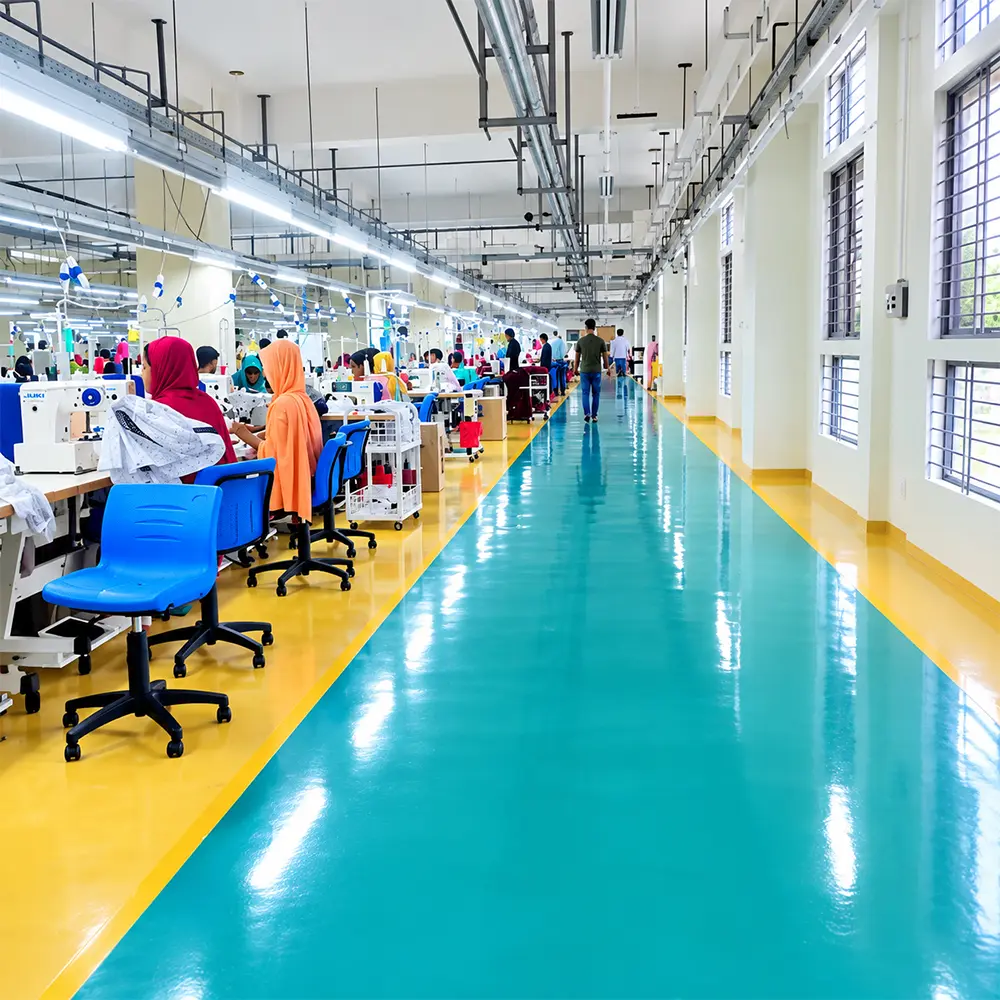
Garment, Textile & Footwear (RMG) Factories
Hard-wearing, easy-to-clean floors for production lines, trolley routes and audit-ready workspaces.
Cold Storage & Freezers
Performs at low temperatures and withstands thermal stress from temperature cycling.
Warehouses & Distribution Centers
Durable surfaces for heavy loads, forklifts, material handling and continuous traffic. Related: car parking flooring and ESD flooring.
PU vs. Epoxy: Which Is Better?
Both PU and Epoxy are seamless resin floors. Choose PU for wet, hot, cold or chemical areas, and epoxy flooring for dry areas where a glossy, decorative finish matters most.
| Feature | PU flooring | Epoxy flooring |
|---|---|---|
| Heat & cold | Hot wash and freezers | Up to about 60°C |
| Impact | Absorbs shock and resists cracking | high rigidity and compressive strength |
| Chemicals | Strong, even food acids | Good, weak on food acids |
| Damp concrete | Handles some moisture | Needs dry concrete |
| Cost | Lower at the start | Higher at the start |
| Finish | Matte, practical | Glossy, more colours |
| Best for | Food, pharma, cold rooms | Dry factories, showrooms |
Tip: Many factories use both, PU in wet or hot zones and epoxy in dry areas.
Advanced (Polyurethane) PU Flooring Solutions
Flexible, Hygienic & Heavy-Duty PU Flooring
In fact, PU flooring provides a seamless, durable and chemical-resistant surface for demanding industrial environments. Depending on traffic and temperature, it is installed as a thin PU coating, a 2–4 mm self-levelling system or a 4–9 mm heavy-duty PU concrete (PU cement) screed, so the right system can be matched to every area of your facility.
Moreover, our industrial polyurethane flooring systems are tailored to each site, so you get PU flooring solutions in Bangladesh that match your load, chemicals and budget.In short, Fountech is a trusted PU flooring company in Bangladesh that installs industrial polyurethane flooring for factories of every size.That is why many factory owners trust Fountech as their PU flooring company in Bangladesh for complete, turnkey PU flooring solutions.

Key Benefits of PU Flooring
Durability & Flexibility
Withstands heavy loads, forklift traffic and impact while staying flexible, which reduces cracking and surface damage.
Chemical & Abrasion Resistance
Resists many acids, alkalis, oils, solvents, sugars and fats, as well as everyday industrial wear.
Temperature Resistance
Handles hot washdowns, freezers and temperature cycling. 9 mm heavy-duty PU concrete systems are typically rated from about -40°C to +120°C.
Seamless & Hygienic
A non-porous, joint-free surface with no gaps for dirt or bacteria, suited to food, pharmaceutical and healthcare facilities.
Slip Resistance
Textured anti-slip finishes improve workplace safety in wet, oily or high-traffic areas.
Low Maintenance & Easy Cleaning
Easy to clean with routine washing, which lowers long-term maintenance costs.
Because of these benefits, industrial polyurethane flooring often lasts far longer than paint or bare concrete. You can learn more about the material itself on Wikipedia’s polyurethane page.
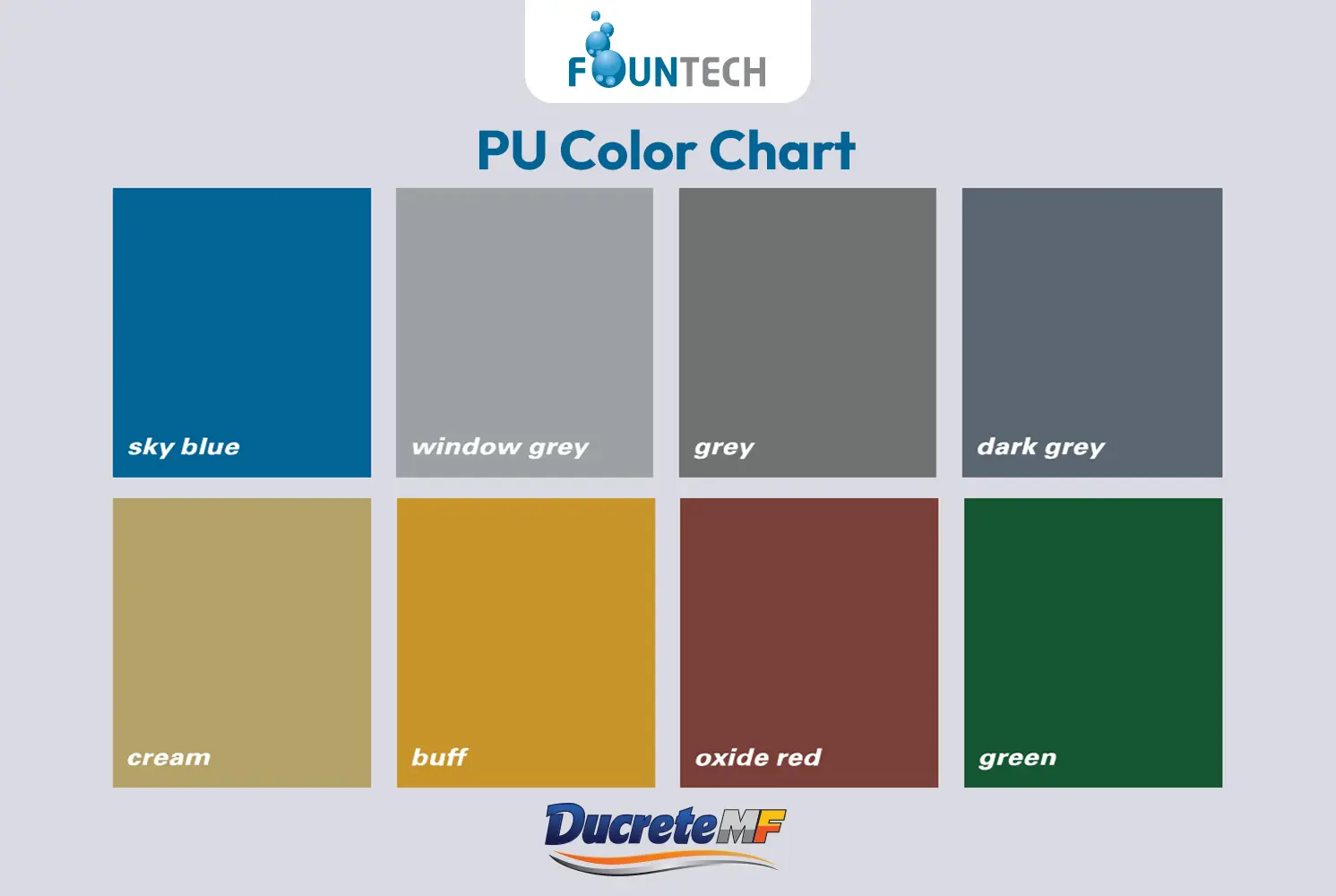
PU Flooring Colours & Finishes
Many Colour Choices
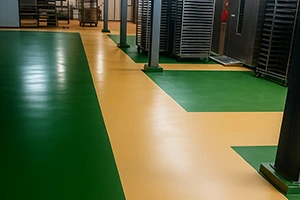
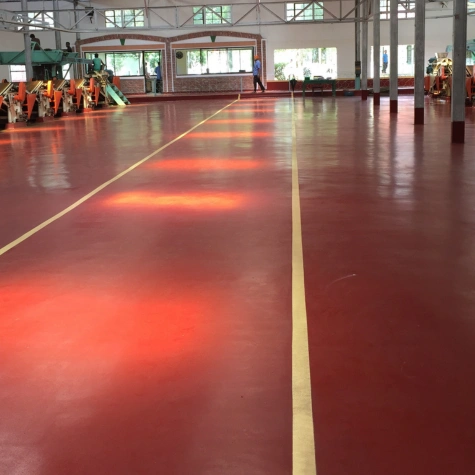
Pick from popular colours like grey, green, blue, red and yellow to suit your factory or brand. Light colours also make a work area look brighter.
Colour-Coded Zones
Use different colours for production, storage and walkways, so everyone can see each area at a glance.
Smooth Finish
A smooth surface that is quick to clean. Good for dry, clean areas such as packing rooms and labs.
Textured Finish
Choose light, medium or heavy grip for wet, oily or sloped areas like washdown zones and ramps.
Low-Shine Look
PU floors usually have a matte or satin finish that cuts glare under factory lights. A topcoat can add a light sheen.
Coving and Line Marking
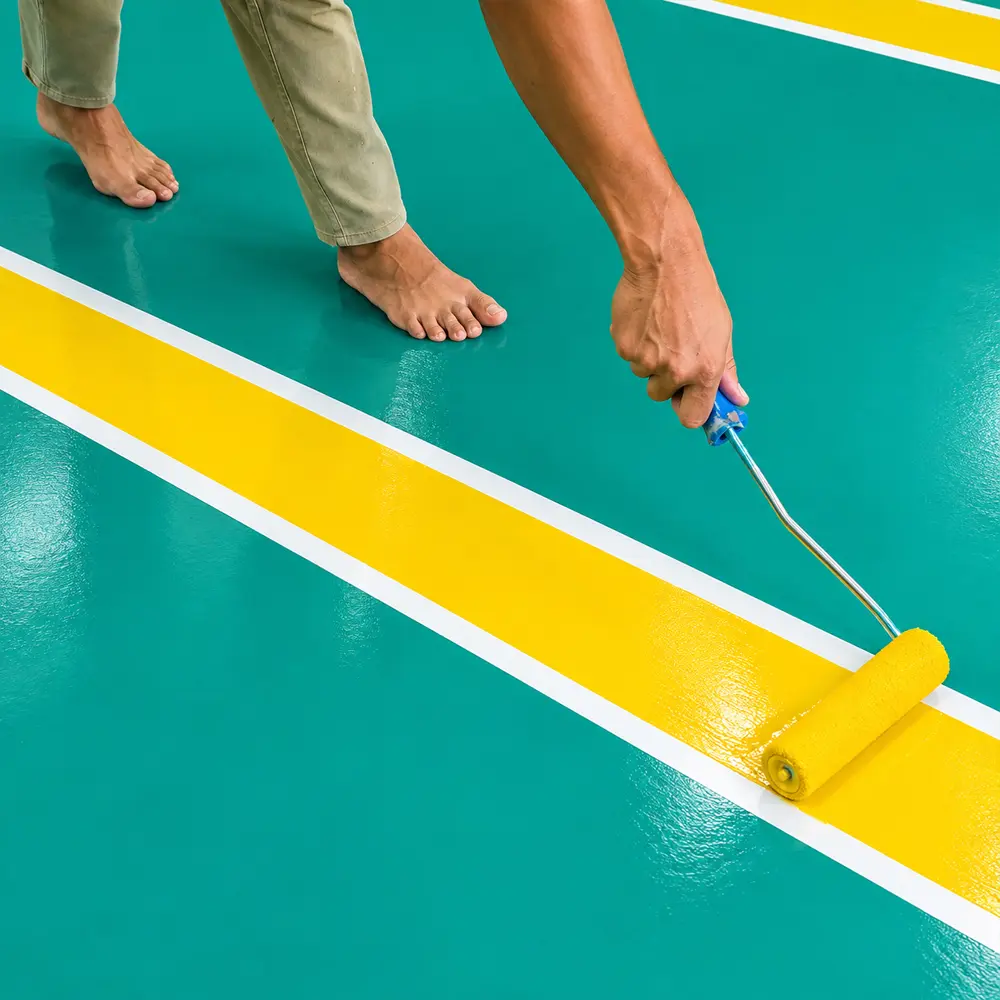
Curved floor-to-wall edges keep dirt out of corners, and painted lines mark walkways and forklift lanes.
In addition, every colour option is available across our PU flooring solutions in Bangladesh, from food-grade screeds to thin coatings.
Step-by-Step Application Process
01 – Site Survey
We inspect the existing substrate, assess moisture conditions, identify defects, and determine the project’s performance requirements. This helps us pick the right system and thickness.
02 – Surface Preparation
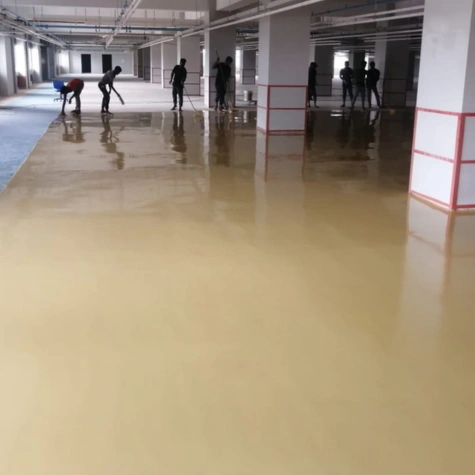
The substrate is mechanically prepared through grinding, leveling, groove cutting, cleaning, and necessary concrete repairs.
03 – Primer Application
A suitable primer is applied to improve substrate adhesion and support the performance of the PU flooring system.
04 – PU Application & Curing
Our trained application team installs the PU system in controlled layers to the required thickness, adds a topcoat or anti-slip finish where specified, and lets it cure before traffic resumes. Light foot traffic is usually possible after 12–24 hours.
PU Flooring Price in Bangladesh
Our PU flooring price in Bangladesh depends mainly on thickness. Here is the price per square foot (sq ft):
Our PU flooring material comes as a 20 kg set. Each set contains Part A (Resin) 2.65 kg, Part B (Hardener) 2.95 kg, Part C (Aggregate) 14.2 kg and 0.2 kg of colour paste. The price per set is 5,000 Tk.
| Thickness | Material Price / sq ft | Best for |
|---|---|---|
| 1 mm | 45 Tk | Light foot traffic |
| 2 mm | 90 Tk | Light production areas |
| 3 mm | 135 Tk | Medium-duty production |
| 4 mm | 180 Tk | Busy production floors |
Note: Prices above are for material only. Application cost is around 20 Tk per sq ft on average, and may vary with floor area, surface condition and site location.
We use materials from Ducon, DPF, VIACOR and Elite Crete UK. The final price also depends on floor area, concrete condition and repairs, finish and project timeline.
Need a heavier floor for forklifts or hot washdowns? Ask about 5–9 mm PU concrete. Contact Fountech for an exact quote.
Why Choose Fountech for PU Flooring?
Fountech has been providing industrial PU flooring solutions in Bangladesh since 2006. With more than 20 years of experience and 2,000+ completed flooring projects, our engineering and application teams deliver PU flooring systems designed for demanding industrial environments. We combine quality materials, technical expertise, professional surface preparation and experienced application to achieve reliable long-term performance.
Fountech is an authorized distributor and applicator of selected construction chemical and industrial flooring brands, including Ducon, DPF, VIACOR and Elite Crete Systems. See examples of our work on our projects page.
- A site survey before every project
- Trained application team and quality materials
- Work planned around your production, even at night or on weekends

Frequently Asked Questions
1. How do I maintain PU flooring in industrial facilities?
PU flooring is low maintenance and easy to clean. Regular sweeping and occasional washing with mild cleaners help keep its performance and appearance, especially in busy industrial areas.
In addition, regular cleaning keeps industrial polyurethane flooring looking new for years.
2. What is the cost of PU flooring in Bangladesh?
In general, PU flooring in Bangladesh costs 60 Tk to 180 Tk per square foot, depending on thickness: 1 mm costs 60 Tk/sq ft, 2 mm costs 100 Tk/sq ft, 3 mm costs 140 Tk/sq ft and 4 mm costs 180 Tk/sq ft. The final price also depends on the total floor area, the condition of the existing concrete and any repairs it needs, the finish required (smooth, anti-slip or with hygienic coving) and the project timeline. Contact us for an exact quotation for your project.
Overall, industrial PU flooring in Bangladesh offers strong long-term value for factories.
For example, industrial PU flooring in Bangladesh usually costs less over its life than repeated repairs to cheaper floors.
Therefore, our PU flooring solutions in Bangladesh use only proven materials for industrial polyurethane flooring.
3. What is the typical lifespan of a PU coating?
When used properly with high-quality materials, PU floor in Bangladesh can last 10 to 15 years or longer.
In most cases, well-installed PU flooring solutions in Bangladesh serve factories for many years.
4. How long does the coating take to cure?
Typically, PU floors cure quickly, ready for light foot traffic in 12–24 hours and for heavy use in 3–5 days.
Finally, as an experienced PU flooring company in Bangladesh, we hand over each industrial polyurethane flooring project with clear maintenance guidance.
5. Can it handle heavy forklift traffic?
Yes. Its high impact resistance and flexibility handle heavy loads, dropped tools, and constant forklift traffic without chipping.
As a result, many warehouses choose our PU flooring solutions in Bangladesh for busy loading bays.
6. What is the difference between PU and epoxy flooring?
Generally, PU flooring is more flexible and handles impact, thermal shock and high temperatures better, so it suits food, beverage, pharmaceutical, cold storage and heavy industrial areas. Epoxy is harder and more rigid, costs more and offers more decorative finishes, so it suits dry production areas, warehouses, showrooms and parking areas. See our epoxy flooring page for details.
As a result, demand for industrial PU flooring in Bangladesh has grown quickly across garments, food and pharmaceutical plants.
Still, as a specialist PU flooring company in Bangladesh, we also install epoxy where it fits better.
Likewise, a good PU flooring company in Bangladesh will help you plan both zones together.
7. What thickness of PU flooring do I need?
It depends on traffic, temperature and cleaning. As a general guide: a thin PU coating for light-duty areas, 2–4 mm self-levelling PU for light- to medium-duty production areas, 4–6 mm PU concrete for wet processing areas, and 6–9 mm heavy-duty PU concrete for forklift traffic, hot washdowns and thermal shock. The right thickness is confirmed after a site survey.
For this reason, our PU flooring company in Bangladesh always recommends a thickness after a site survey.
Meanwhile, if you need PU flooring solutions in Bangladesh for a new plant, we can plan a site visit quickly.
8. Is PU flooring suitable for food and pharmaceutical factories?
Yes. In fact, PU concrete creates a seamless, non-porous surface without joints where bacteria can collect. It resists organic acids, sugars, fats and strong cleaning chemicals and tolerates hot washdowns, which is why it is widely used in food, beverage, dairy and pharmaceutical facilities that must meet hygiene and GMP requirements.
Similarly, our team has delivered industrial polyurethane flooring for warehouses, cold rooms and labs, and we remain a go-to PU flooring company in Bangladesh for these sectors.
9. Can PU be applied on new or damp concrete?
In particular, many PU concrete systems tolerate more substrate moisture than standard epoxy, and some can be applied to concrete only 7–10 days old, which helps fast-track projects. This matters in Bangladesh, where high humidity and the monsoon often keep slabs damp. The concrete must still be moisture-tested and properly prepared to prevent blistering or delamination.
Furthermore, a reliable PU flooring company in Bangladesh will test moisture before work starts.
10. Is the surface slippery when wet?
A smooth PU finish can become slippery when wet or oily. For wet processing, washdown and ramp areas, a textured anti-slip finish is recommended. The texture level is chosen to balance slip resistance with ease of cleaning.
11. Can installation happen while the factory is running?
In many cases, yes. The work can be planned area by area, at night, on weekends or during shutdowns, so production continues in other zones. Fast-curing PU systems are usually ready for light foot traffic within 12–24 hours, depending on the product, thickness and site temperature.