Choosing between floor hardener and epoxy flooring is one of the most common questions we get from factory and warehouse owners in Bangladesh. Both make concrete floors stronger and longer-lasting, but they work in very different ways, suit different conditions and cost differently. This guide compares floor hardener vs epoxy so you can pick the right system for your facility.
What Is a Floor Hardener?
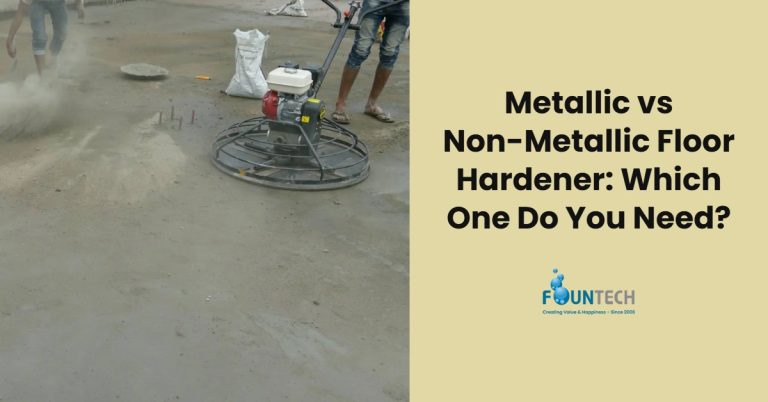
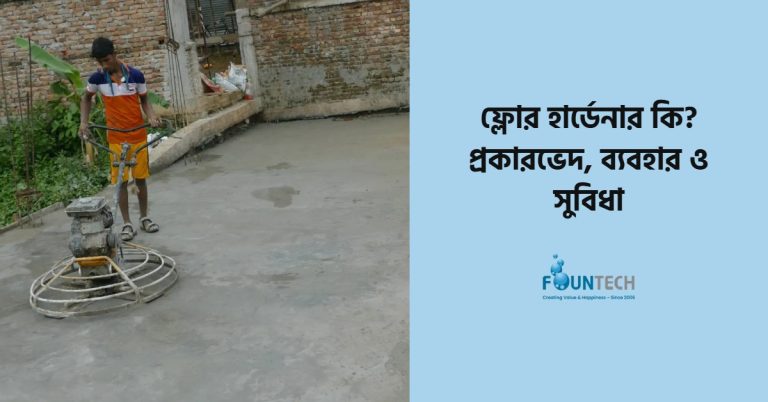
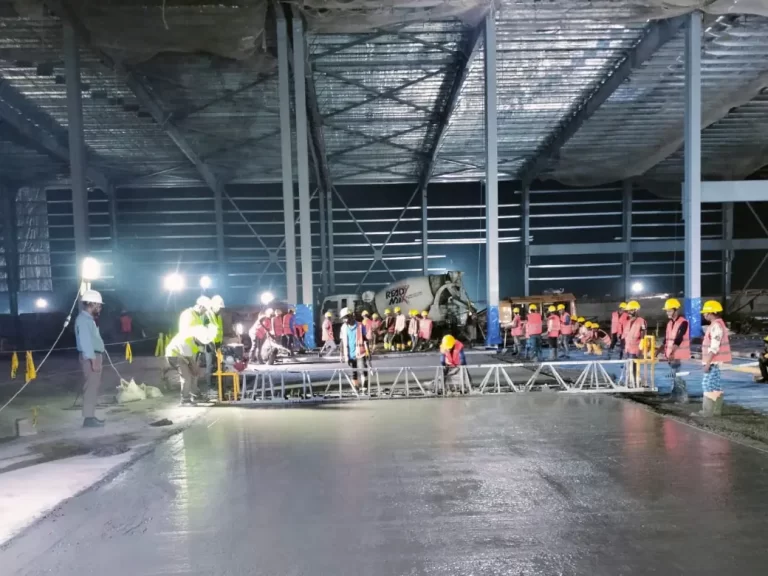
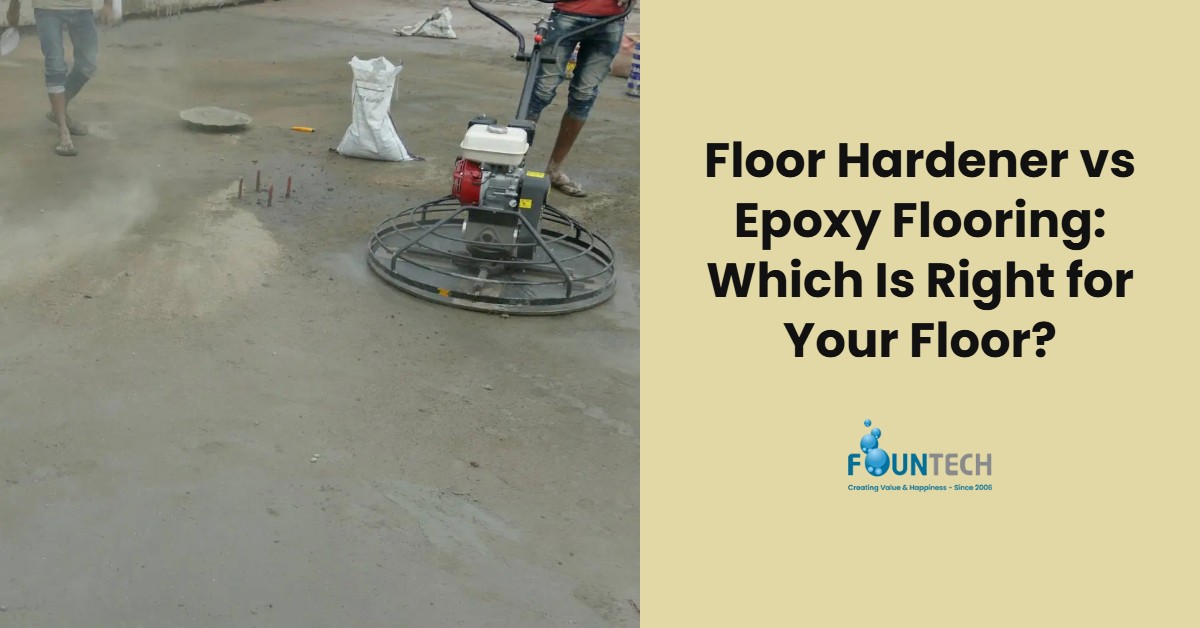
A dry-shake floor hardener is a blend of cement and hard mineral or metallic aggregates. It is broadcast onto freshly placed concrete while the concrete is still setting, then power-floated and troweled into the surface. The result is a dense, hard top layer that becomes part of the slab itself, giving much better resistance to abrasion, impact and dusting than plain concrete. Learn more about our floor hardener in Bangladesh service.
What Is Epoxy Flooring?
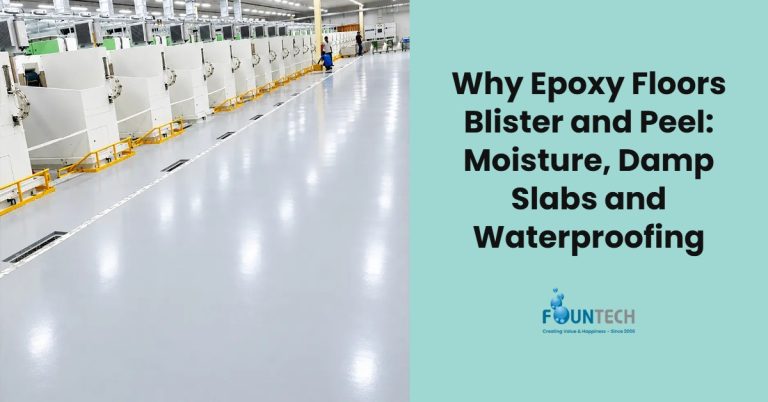
Epoxy flooring is a resin coating applied on top of cured, dry and properly prepared concrete. It forms a seamless, glossy and easy-to-clean surface that resists many chemicals, oils and spills. Epoxy comes in many colors and finishes and can include anti-slip texture and safety line marking. See our epoxy flooring in Bangladesh service for available systems.
Floor Hardener vs Epoxy: Side-by-Side Comparison
| Factor | Floor Hardener | Epoxy Flooring |
|---|---|---|
| When it is applied | On fresh concrete, during casting | On cured, dry concrete (new or old) |
| How it works | Becomes part of the concrete surface | Coating bonded on top of the concrete |
| Abrasion and impact | Excellent, especially metallic types | Good; very heavy steel-wheel traffic can scratch it |
| Chemical resistance | Limited | Good to very good |
| Hygiene and cleaning | Better than bare concrete, but not fully seamless | Seamless, easy to clean |
| Look and colors | Mostly grey or a few colors | Wide choice of colors and finishes |
| Old floors | Not possible with dry-shake type | Yes, after surface preparation |
| Typical cost | Lower | Higher |
When to Choose Floor Hardener
- You are building a new slab and can apply the hardener during casting.
- The floor will take heavy forklifts, trolleys, pallets and dragging loads.
- You need a tough, low-dust surface for a warehouse, logistics center, loading dock or parking area.
- Chemical spills are rare and appearance is not the main priority.
- You want a durable floor at a lower cost per square foot.
When to Choose Epoxy Flooring
- You need to upgrade an existing floor that is already in use.
- The area faces oil, chemicals or regular spills, such as workshops and production lines.
- Hygiene matters: food, pharmaceutical, electronics or clean areas.
- You want colors, safety zones and line marking for traffic flow.
- You want a bright, professional look for a showroom or factory floor.
Can You Combine Floor Hardener and Epoxy?
Yes. Many facilities use floor hardener on the slab during construction for strength, and later apply epoxy or PU flooring in selected areas such as production lines, wash zones or labs. The hardened surface must be mechanically prepared (for example by grinding or shot-blasting) before coating so the epoxy can bond properly.
Common Mistakes to Avoid
- Applying epoxy on a damp slab. Moisture rising through concrete is a leading cause of blistering and peeling, so plan waterproofing and moisture testing first.
- Choosing the wrong hardener type or application rate for the expected traffic.
- Skipping proper curing of the concrete after the hardener is applied.
- Using epoxy alone in areas with heavy impact where a hardener or heavy-duty system is needed.
Cost Considerations
Floor hardener usually costs less than a resin floor because it is applied during casting and needs no separate coating stage. Epoxy costs more but adds chemical resistance, hygiene and appearance. The final price depends on area size, slab condition, system thickness and site access. For a rough idea, read our guide on floor hardener price in Bangladesh.
Which One Is Right for You?
If you are casting a new warehouse or logistics floor and need maximum wear resistance at a sensible cost, floor hardener is usually the better choice. If you are upgrading an existing floor or need chemical resistance, hygiene and a finished look, choose epoxy. For many factories, the best answer is both. Compare all options in our guide to types of industrial flooring or explore our industrial flooring solutions in Bangladesh.
Not sure which system fits your floor? Contact Fountech for a site visit and recommendation.