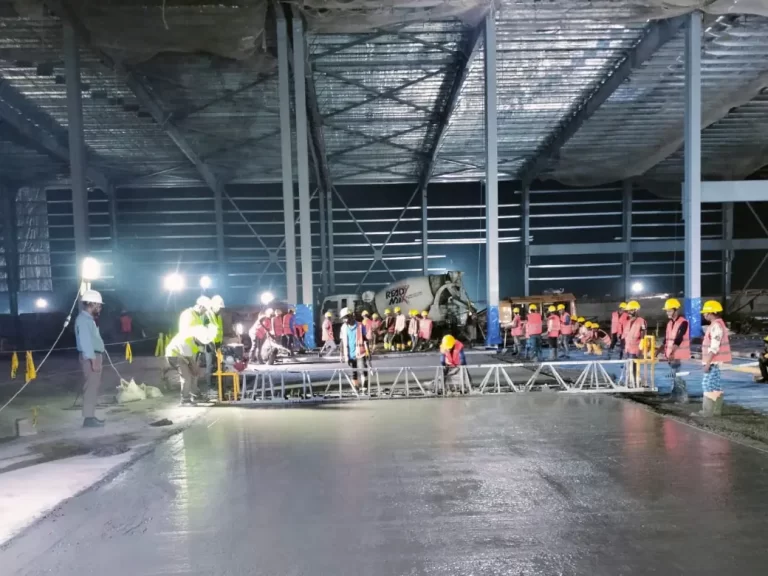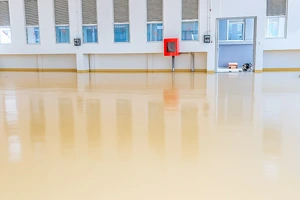
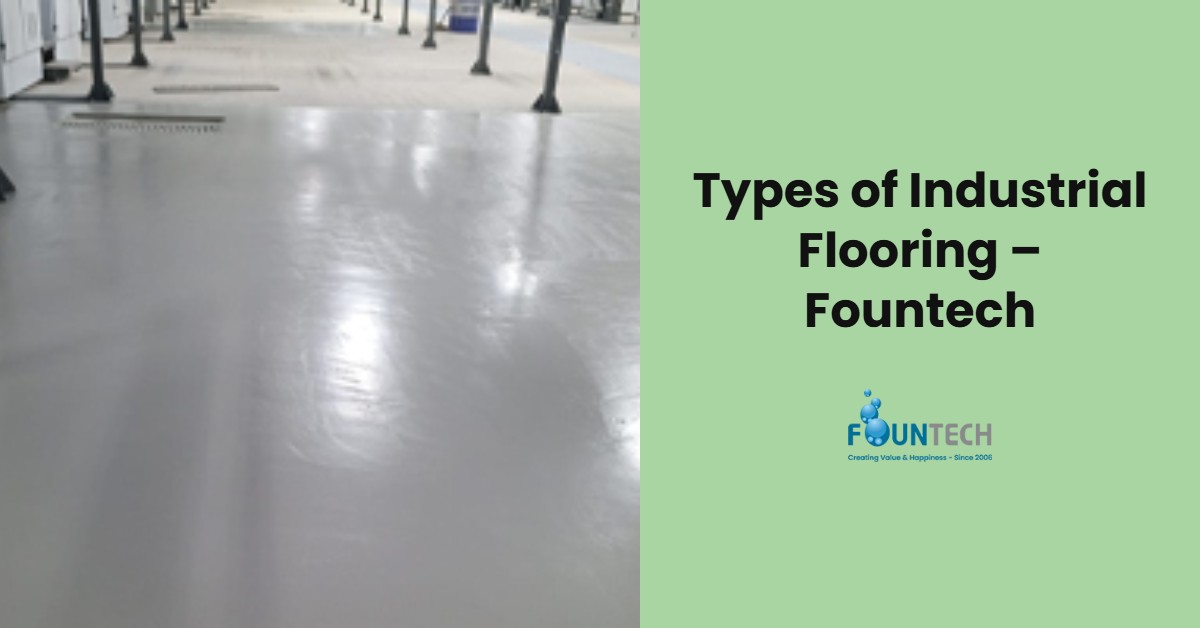
Industrial flooring is a specialized flooring system designed for the demands of industrial environments such as warehouses, factories, manufacturing plants and heavy-duty commercial spaces. These floors are built to handle heavy foot traffic, forklifts and machinery, chemical spills and extreme conditions while staying durable, safe and easy to maintain. If you are planning a new facility or upgrading an old floor, our complete guide to industrial flooring in Bangladesh explains the full range of solutions Fountech offers.
Industrial flooring goes back to the Industrial Revolution, when factories first needed floors that could survive constant production. Early floors were simple concrete. As industries evolved, so did flooring: polished concrete, floor hardeners, epoxy and polyurethane systems were developed to give much better resistance to wear, chemicals and temperature changes.
Types of Industrial Flooring
There is no single best floor for every factory. The right choice depends on traffic load, chemical exposure, hygiene rules and budget. These are the main types of industrial flooring used in Bangladesh today.
1. PU Flooring
Polyurethane (PU) flooring is flexible and highly resistant to chemicals, acids, alkalis and solvents. PU concrete systems also handle hot washdowns and temperature shock, which is why they are the first choice for food processing, pharmaceutical and chemical industries. Learn more about PU flooring in Bangladesh.
2. Epoxy Flooring
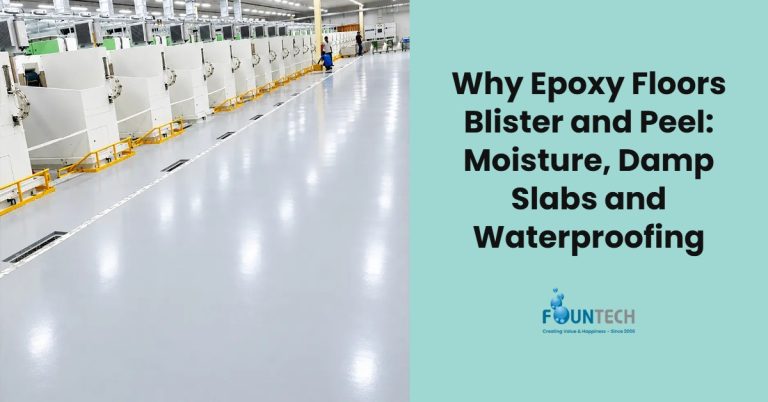
Epoxy is one of the most popular industrial floor coatings. It creates a hard, seamless and glossy surface that resists heavy traffic, oil and spills, and it is easy to clean. Epoxy suits factories, warehouses, showrooms and workshops. See our epoxy flooring in Bangladesh service for systems and finishes.
3. Floor Hardener
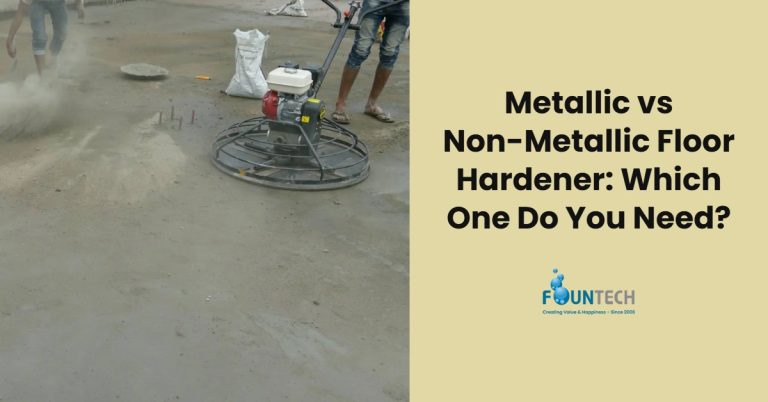
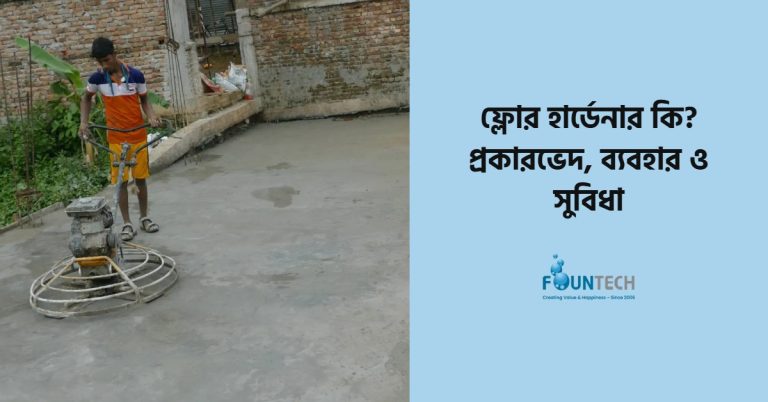
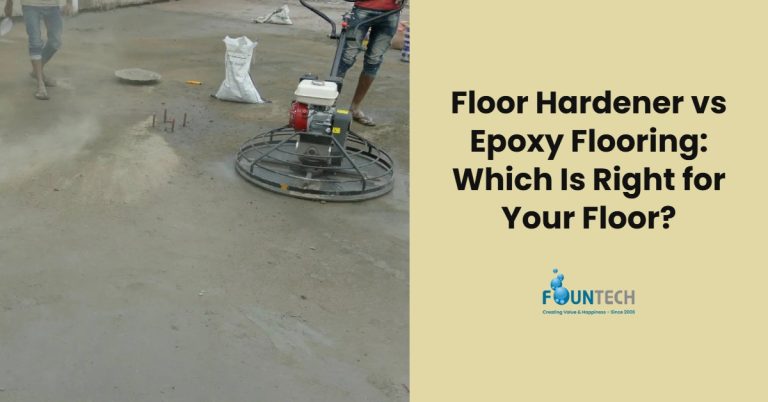
A floor hardener is applied on fresh concrete and power-troweled into the surface. It makes the top layer of the slab far more resistant to abrasion, impact and dusting, without the cost of a full resin coating. It is a smart, budget-friendly option for warehouses, loading docks and heavy-traffic production areas. Read more about floor hardener in Bangladesh.
4. Polished Concrete Flooring
Polished concrete is ground and densified to give a smooth, glossy and very durable surface. It needs little maintenance and is often used in warehouses, retail spaces and showrooms.
5. Conductive (ESD) Flooring
Electrostatic discharge (ESD) flooring prevents static electricity buildup. It is essential for electronics manufacturing, cleanrooms, data centers and areas with sensitive equipment. Explore our conductive ESD epoxy and PU flooring.
6. Super Flat Flooring
Super flat flooring gives an ultra-level surface for high-precision environments such as high-rack warehouses with automated equipment. It keeps machinery and vehicles aligned and reduces wear. Find out more about super flat flooring.
7. Car Parking Garage Flooring
Parking areas need anti-skid, oil-resistant and wear-resistant floors that can take tire traffic every day. Coated epoxy and PU systems with clear line marking keep them safe and clean. See our car parking garage flooring solutions.
Why Waterproofing Matters for Industrial Floors
Even the best floor coating can fail if moisture rises through the concrete slab. Damp slabs cause epoxy and PU coatings to blister, peel and lose adhesion, and water leakage from roofs, basements and wet areas damages machinery and stock. That is why waterproofing should be planned together with your flooring, especially for ground-floor slabs, basements, cold rooms and washdown areas. Fountech provides complete waterproofing in Bangladesh, so your floor system is protected from below and above.
Benefits of Industrial Flooring
- Durability: Built to handle heavy machinery, forklifts and foot traffic for years.
- Chemical Resistance: PU and epoxy systems resist oils, acids and harsh cleaning chemicals.
- Hygiene: Seamless floors have no joints for dirt and bacteria, so they are easy to clean.
- Safety: Anti-slip finishes and clear line marking reduce accidents.
- Cost-Effective: Higher upfront cost is offset by long life and low maintenance. Read more about the benefits of epoxy flooring.
Usage Areas
- Manufacturing Plants: Epoxy and PU floors withstand heavy machinery, traffic and spills.
- Warehouses: Floor hardener, polished concrete and super flat floors give strong, low-dust surfaces for racking and forklifts.
- Food Processing Units: PU concrete flooring handles chemicals, hot water and temperature changes.
- Pharmaceutical Plants: Seamless, easy-to-clean floors support strict hygiene standards.
- Electronics Factories: ESD flooring protects sensitive components from static.
- Automotive and Parking Areas: Oil-resistant, anti-skid coatings for workshops and garages.
How to Choose the Right Industrial Flooring
Start by listing the load (foot traffic, forklifts or heavy vehicles), the chemicals and temperatures the floor will face, your hygiene requirements and your budget. Then check the condition and moisture level of the existing slab. A site survey by an experienced applicator is the best way to match the right system to your facility.
Conclusion
Modern industrial flooring gives factories and warehouses the durability, safety and hygiene they need to run smoothly. Whether you need PU, epoxy, floor hardener or ESD flooring, with proper waterproofing underneath, Fountech can design and install the right system. Explore our industrial flooring solutions or contact Fountech for a free site survey and quotation.
Related reading: Best Flooring Solution in Bangladesh and PU Flooring Application Procedure in Bangladesh.