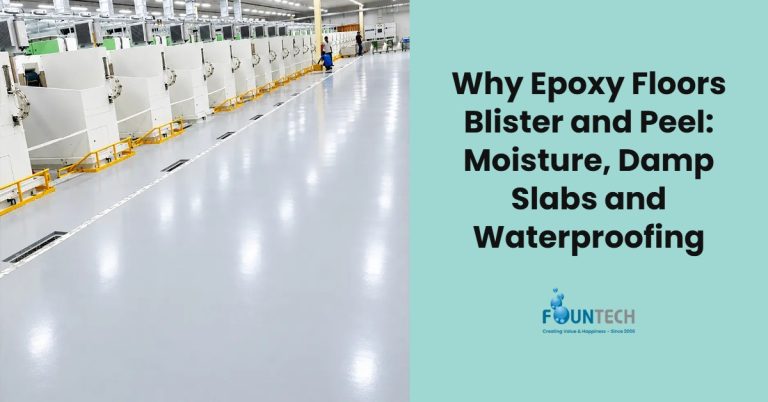
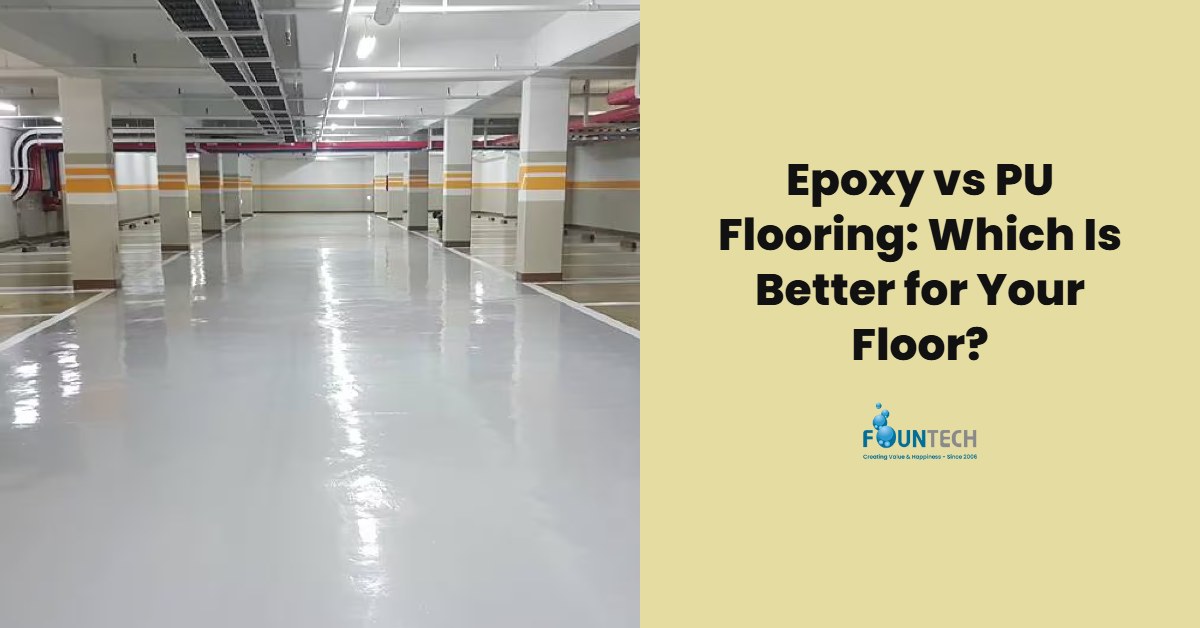
Epoxy is the better choice for dry areas like warehouses, showrooms and assembly lines. PU (polyurethane) is better for wet, hot or chemical-heavy areas like food plants, pharma units and cold rooms. Both are seamless resin floors, but they behave very differently under heat, moisture and impact.
At Fountech, we have installed industrial floors in Bangladesh since 2006. This guide explains the real differences so you can choose with confidence.
What is epoxy flooring?
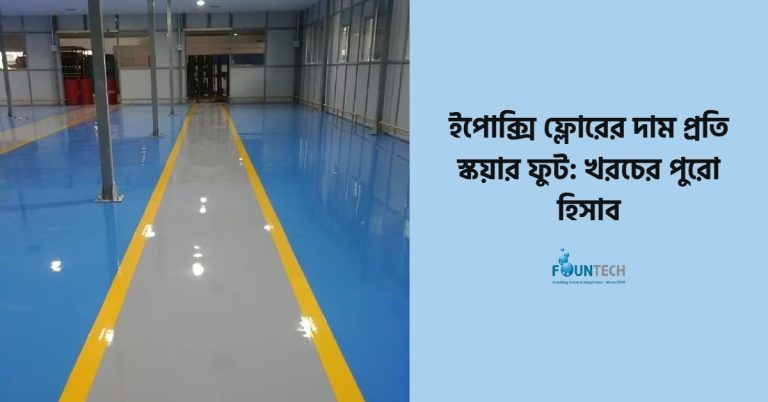
Epoxy flooring is a two-part resin system (resin + hardener) applied over concrete. It cures into a hard, glossy and seamless surface. It is usually laid from 1 mm to 4 mm thick. Learn more on our epoxy flooring in Bangladesh page.
What is PU flooring?
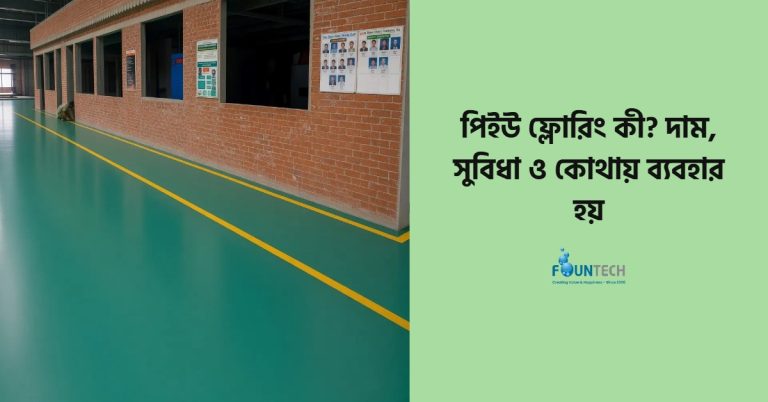
PU flooring is a polyurethane resin system. It is more flexible than epoxy, so it handles thermal shock, steam cleaning and impact better. It comes as a thin coating, a 2–4 mm self-levelling system or a 4–9 mm heavy-duty PU concrete screed. See our PU flooring in Bangladesh page.
Epoxy vs PU: side-by-side comparison
| Feature | Epoxy flooring | PU flooring |
|---|---|---|
| Hardness | Very hard, high gloss | Slightly flexible, absorbs impact |
| Heat and thermal shock | Can crack with hot water or steam | Heavy-duty PU concrete is rated about -40°C to +120°C |
| Moisture and wet areas | Best for dry areas | Handles constant washing and wet floors |
| Chemical resistance | Good for oils and mild chemicals | Better for acids, fats, sugar and food chemicals |
| UV and colour | Can yellow in sunlight | Better colour stability |
| Look | Glossy, decorative, metallic and 3D options | Matte or satin, functional |
| Lifespan | 10–15 years when laid well | 15–20 years when installed correctly |
| Material price (Fountech) | From 70 Tk per sq ft (1 mm) | From 45 Tk per sq ft (1 mm) |
Prices are for material only. Application costs about 20 Tk per sq ft on average and changes with floor area, surface condition and location.
When should you choose epoxy?
- Warehouses and logistics centres with forklift traffic
- Garment and electronics assembly lines
- Showrooms, offices and hospitals where looks matter
- Car parking and garage floors
- Decorative floors: metallic, flake or 3D epoxy
When should you choose PU?
- Food, beverage and dairy processing plants
- Pharmaceutical production areas
- Cold rooms and freezers
- Areas cleaned with hot water or steam
- Floors that face heavy impact and chemicals every day
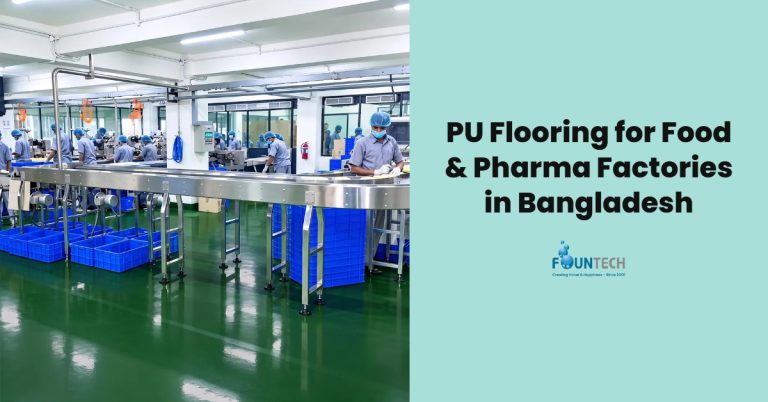
Running a food or pharma plant? Read our guide to PU flooring for food and pharma factories.
Epoxy vs PU cost in Bangladesh
Cost depends on thickness. A thicker floor costs more but lasts longer under heavy load.
| Thickness | Epoxy material / sq ft | PU material / sq ft | Best for |
|---|---|---|---|
| 1 mm | 70 Tk | 45 Tk | Light foot traffic |
| 2 mm | 140 Tk | 90 Tk | Light production areas |
| 3 mm | 210 Tk | 135 Tk | Medium-duty production |
| 4 mm | 280 Tk | 180 Tk | Busy production floors |
Prices above are for material only. Application costs about 20 Tk per sq ft on average for both systems, so a complete 3 mm floor comes to about 230 Tk per sq ft for epoxy and 155 Tk per sq ft for PU (200 Tk per sq ft for 4 mm PU).
The cheapest floor is not always the cheapest choice. A floor that fails in two years costs more than the right floor that lasts ten.
Common mistakes when choosing
- Choosing epoxy for a hot or wet area because it looks shinier.
- Skipping surface preparation. Poor preparation is the top reason resin floors peel. Read why epoxy floors blister and peel.
- Choosing thickness by budget instead of by traffic and load.
- Ignoring moisture in the concrete before coating.
Frequently asked questions
Is PU flooring better than epoxy?
Not always. PU is better for heat, moisture and chemicals. Epoxy is better for dry areas and decorative finishes.
Which lasts longer, epoxy or PU?
In dry areas a good epoxy floor lasts 10–15 years. A correctly installed PU floor typically lasts 15–20 years, and in wet or hot areas it outlasts epoxy because epoxy can crack.
Can PU be applied over an epoxy floor?
Yes, in many cases, after proper grinding and priming. A site check is needed first.
Which is better for a food factory?
PU, especially PU concrete. It handles hot washing, fats and acids.
How long does installation take?
Most projects take a few days, depending on area and system. The floor needs curing time before heavy traffic.
Not sure which floor you need?
Fountech’s team will visit your site, check the concrete and recommend the right system. Book a free site survey today or call 01844-652497.